
After-Christmas Sales 2026: What Actually Goes Cheap on Dec 26 (and What to Skip)
Black Friday gets the noise, but the week after Christmas is where I have found the steepest honest discounts of the year. On December 26 the seasonal aisle — decorations, wrapping paper, holiday gift sets — drops 50% overnight, and by mid-January the winter coats and boots nobody bought at full price are 60–70% off. The catch is that most of the sale is stuff nobody wants, and the real deals hide inside it.
I treat the after-Christmas sales as two different events wearing one name. The first is the seasonal clear-out: buy next year’s decorations at half price or better. The second is the winter clearance: coats, sweaters, and boots at January prices. This guide covers both, in order, so you buy the right thing on the right day instead of panic-buying a discounted candle you will never light.
The clearance calendar is the whole game
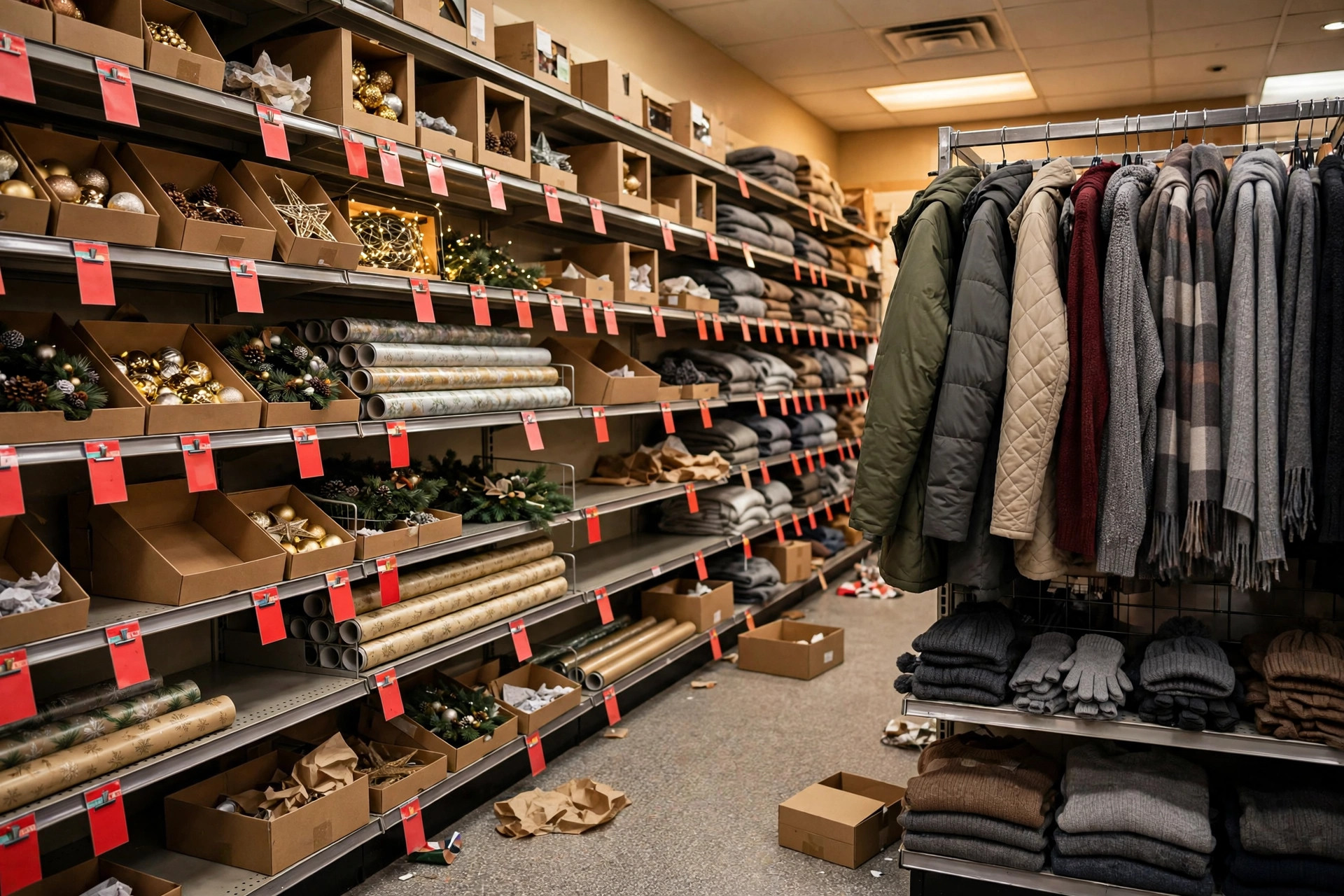
December 26 is the opening bell, and the first markdown is usually 50% on anything with a holiday on it: ornaments, lights, wrapping paper, gift bags, advent calendars, holiday-scented candles. Retailers need that aisle back for January stock, so the discount is real — it is not a was-price game, it is a warehouse problem. Shop this day if you want the full selection; the good wrapping paper and the popular ornament sets sell through by New Year’s Day.
The second wave lands in the first week of January, when winter clothing joins the clearance: coats, sweaters, boots, scarves, and gloves at 40–60% off. The third wave is mid-to-late January, when the leftovers hit 70–75% off — but by then the sizes are gone and the colors are the ones nobody picked. My rule: buy the thing you actually need in the second wave, and only hunt the third wave for next year’s staples in sizes you already know.
What actually goes cheap
Holiday decorations and wrapping are the headline deal, and they are the one category where buying a year ahead is a genuine win: ornaments, lights, gift wrap, and cards at 50–75% off, with quality identical to what you paid full price for in November. Buy the classics — plain gold, silver, and white — not the licensed character set your kid will outgrow by next December. One caveat from my own closet: store it somewhere you will find it. A $12 box of ornaments bought for $3 is not a deal if it spends eleven months lost in the garage.
Winter clothing is the slow burn. Coats, boots, and heavy sweaters start at 30–40% off on December 26 and deepen through January as retailers make room for spring lines. The sweet spot is the first week of January, when the discount is real and the sizes are still there. Buy the coat in the size you wear now, not the size you hope to be — clearance coats are almost always final sale.
Toys and gift sets are the third pile: the holiday gift sets that did not sell, the board games, the toy overstock. Expect 40–60% off on sets and 30–50% on toys, with the best picks gone by New Year’s Day. This is also the moment to spend the gift cards you received — they stack with clearance prices, and a $50 card buys $100 of January markdowns.
What to spend
Under $25 is the stocking-up tier: wrapping paper, gift bags, cards, ornaments, holiday lights, and the candles that are actually worth half price. This is where the 50–75% cuts live, and it is the tier where buying a year ahead pays for itself in one trip. Keep it to the things you genuinely use every December — two rolls of paper, one set of lights, one box of ornaments — not a cartful of maybe.
$25–75 is the winter-clothing tier: the sweater, the boots, the scarf-and-glove set, the kid’s snow gear a size up for next winter. January is the cheapest month of the year for this stuff, and a $60 coat at 50% off is the rare clearance buy that is also a need. This is also the tier where the gift-card stack matters: a $50 card plus a 50% markdown turns a $75 coat into a $25 out-of-pocket buy.
Above $75, only buy the thing you already wanted. The after-Christmas sales are not the time for a big-ticket guess — the TV and laptop floors were Black Friday week, November 27, and the January prices on electronics are mostly the same sale with a new sign. If a big item is genuinely 40% or more off and you have the receipt and the return window, fine; otherwise the money is better spent on the winter gear and decor that are actually at their floor.

Three traps
The fake-clearance trap: not everything with a red tag is on sale. Retailers move evergreen items — the plain sweater, the basic boots — into the clearance aisle at their normal price with a red sign. Check the original price against what it sold for in November; if you cannot find a real was-price, it is not a deal. Our how-to-spot-a-real-deal guide has the full check.
The final-sale trap: most clearance is final sale, no returns, no exchanges. That matters most for clothing and shoes, where a wrong size is a total loss. Try it on in the store, or buy the size you already own in that brand. Online clearance with no free returns is a coin flip — only buy it if you would keep it in the wrong size.
The next-year trap: buying next December’s gifts in January feels clever until the tastes change. Kids outgrow characters, adults outgrow gadgets, and a gift bought a year early is a gift you have to store, remember, and still like in eleven months. Buy next year’s consumables — wrap, cards, lights — and this year’s needs. Leave next year’s actual gifts alone.
The stack and the January endgame
The after-Christmas stack is the best of the year, because the gift cards do the heavy lifting: spend the cards you received on clearance prices, add a cashback portal (5–15% on top of the markdown), and use any store loyalty points before they expire in the new year. On a $75 winter coat marked to $37, a $25 gift card and 10% cashback brings it to about $9 out of pocket — that is the math that makes January worth shopping.
The endgame is January 31, not December 26. By the last week of January the seasonal aisle is gone, the winter clothing is picked over, and the retailers are already selling spring. If you have not bought it by then, the deal is over — and that is fine, because the next real window is the February winter clearance and the spring sales our when-to-buy-what-month-by-month guide maps out. Spend the gift cards, return the duplicates before the holiday return window closes (most stores extend it into January — our holiday-return-policies-guide-2026 guide has the dates), and start the year with a closet that is fuller and a wallet that is not emptier.
Frequently asked questions
When do after-Christmas sales start in 2026?
Online sales start Christmas evening, December 25, and in-store clearance starts the morning of December 26. The first markdown is usually 50% on seasonal items; winter clothing deepens to 40-60% off in the first week of January and 70% or more by mid-January.
What is the best thing to buy in the after-Christmas sales?
Holiday decorations, wrapping paper, and gift bags at 50-75% off — they are identical next year and cost half. Winter coats, boots, and sweaters are the second-best buy, at their cheapest in the first week of January.
Are after-Christmas sales better than Black Friday?
For seasonal goods and winter clothing, yes — the cuts are deeper and the prices are real clearance, not was-price theater. For electronics, no: TVs and laptops hit their floors on Black Friday week, November 27, and January prices are rarely better.