
Black Friday 2026 Tablets & E-Readers Guide: iPads, Galaxy Tabs, and the Storage Trap
Tablets are a Black Friday tradition: Apple and Samsung clear out last-generation models ahead of the fall launches, Amazon practically gives away Fire tablets as doorbusters, and e-readers see their only real discounts of the year. But the sticker price is rarely the whole story — storage tiers, accessory math, and cellular upsells can quietly double what you actually pay.
Here is how I would shop it: pick the use case before the tablet, know the real price floors, skip the storage upsell, price the full kit, and buy at the right week. Black Friday is November 27, 2026; Cyber Monday is November 30.

Pick the use case, then the tablet
Tablets do four different jobs, and the right one depends on yours. Couch streaming and browsing: any mid-tier tablet works, so buy the cheapest decent screen. Kids and schools: durability and price matter more than specs — this is exactly where the $50 to $80 Fire tablet doorbusters earn their keep. Drawing and notes: that is Apple Pencil and S Pen territory, which locks you into an iPad or a Galaxy Tab S. Reading: skip the tablet entirely and buy a dedicated e-reader — e-ink is easier on the eyes and a single charge lasts weeks.
The ecosystem question matters most for kids and schools. If the household runs on iPhones and shared apps, an iPad plugs into that world for free; if everyone is on Android and Google services, the Galaxy Tab side is smoother. Mixing ecosystems is fine for a streaming-only tablet, annoying for one that shares apps, photos, and notes. We have bought both sides of this, and the mixed-ecosystem tablet is always the one that gathers dust.
Do not buy tablet power for phone tasks. A $600 flagship that mostly plays video is $400 of unused processor. Match the tablet to the job and the job gets cheaper.
Price tiers worth waiting for
Under $150 is Fire tablet territory: models that sell at $100 to $150 most of the year drop to $50 to $80 on Black Friday week, and at those prices they are the best gift tablet made. Know what you are buying: the screen is dimmer, the chip is slower, and the app store is Amazon-flavored. I put a Fire tablet in the kitchen two years ago for recipes and timers, and honestly it has been perfect — none of the spec complaints matter at the counter.
The $200 to $350 tier is the sweet spot: previous-generation base iPads that launched at $329 to $449 routinely land at $230 to $300, and last-gen Galaxy Tab A and S models see 25 to 35 percent off. This is where Black Friday earns its reputation. The year-over-year differences are usually a slightly brighter screen and a chip you will never push, so last-gen at 30 percent off beats current-gen at 10 percent off nearly every time.
Above $500, discounts are real but shallow: iPad Pro and Galaxy Tab S Ultra models see $75 to $150 off rather than percentage cuts, because these are the flagships the brands want to protect. If you are spending this much, check refurbished and open-box listings first — they often beat the new-in-box sale price by another $100.
E-readers play by different rules: entry models that hold at $90 to $110 most of the year drop to $60 to $80 on Black Friday week, and the larger mid-tier models with warm light and waterproofing fall from $150 to $190 down to $100 to $130. These are the only meaningful discounts of the year on e-readers, so if you read daily, this is your window.
The storage trap
Tablet pricing is built around storage tiers, and the tiers are the most profitable part of the device. Bumping from 64GB to 128GB often costs $100 at checkout when the flash memory inside costs the manufacturer a fraction of that. For a streaming-and-browsing tablet, the base tier is almost always the right call — video streams, it is not downloaded, and 64GB holds more apps than most people install.
The exceptions are real but narrow: downloading movies for travel, a kid who fills storage with games, or shooting and editing 4K video. For everything else, keep the $100. And check for microSD expansion on the Galaxy Tab side before you pay for a tier — a $25 memory card beats a $100 storage step-up every single time. In my experience, the storage upsell is the easiest money in the tablet aisle, which is exactly why it gets pushed so hard.
E-readers make the whole question irrelevant: ebooks are tiny, and even the smallest tier holds thousands of books. Never pay the storage upsell on an e-reader — there is no scenario where it matters.
Accessory math and the refurb sleeper
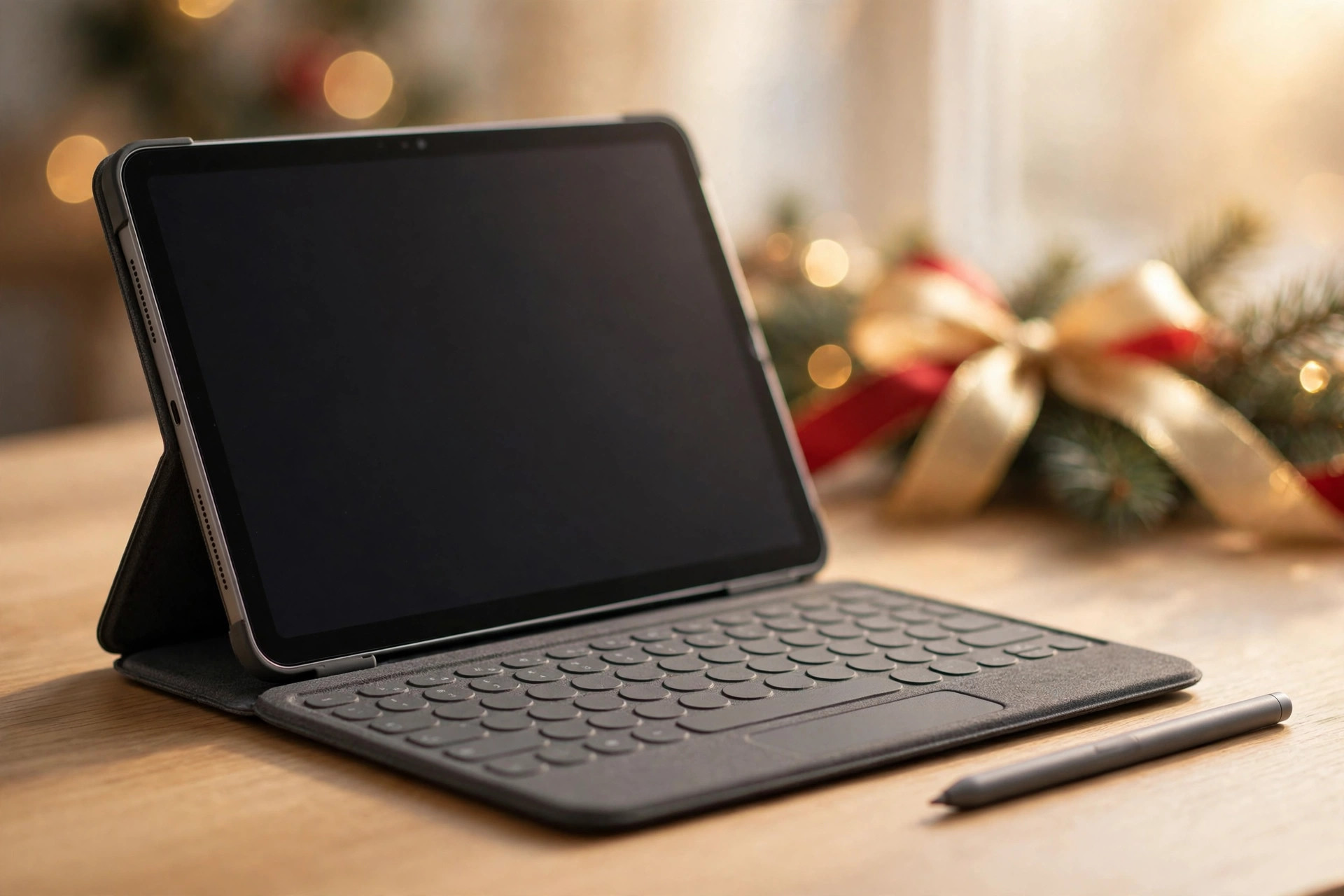
The advertised tablet price is rarely the final price. A stylus runs $70 to $130, a decent keyboard case $100 to $200, and screen protectors, chargers, and stands add up fast. Price the full kit before you compare deals: a $250 tablet that needs $200 in accessories is a $450 purchase, and sometimes the $350 bundle with the stylus included is the better deal. I learned this the hard way with a drawing setup that ended up costing more than the tablet did.
Refurbished is the sleeper deal in tablets. Manufacturer-refurbished iPads carry the same warranty as new and routinely land 20 to 30 percent below the Black Friday sale price of a new unit — and the hardware barely changes year to year, so a refurbished last-gen model is two generations of discount for one generation of age. When I tested a refurb against a new unit side by side last year, I could not tell which was which without the box.
The cellular-model tax applies here too: the cellular version costs $130 to $150 more plus a monthly line fee, and for a device that lives on home and school Wi-Fi, that is a subscription to nothing. Skip it unless the tablet genuinely travels without a phone nearby.
Timing: when tablets actually bottom out
Early-November preview sales start the tablet discount wave: $40 to $60 off current models and the first wave of last-gen clearances. Black Friday week, November 27, brings the floor prices — this is when Fire tablets hit their doorbuster lows, last-gen iPads land at their cheapest, and e-readers see their one big annual drop.
Cyber Monday, November 30, is the refurb and open-box day: retailers clear the remaining last-gen stock and the manufacturer-refurbished channels reload, often at the deepest prices of the whole season. If you missed a floor price on Friday, check the refurb listings Monday morning before paying the week-of price.
One rule for all of it: buy the tablet you will actually use, not the one with the biggest percentage off. A $600 tablet at 40 percent off that you replace with an iPad in March was not a deal — it was a rental with extra steps.
Frequently asked questions
Fire tablet or iPad for Black Friday?
Fire tablets at $50 to $80 are the kids’ doorbuster. For everyone else, last-gen iPads and Galaxy Tabs at $200 to $350 are the sweet spot, with only shallow $75 to $150 cuts on flagships.
Should I pay for more storage on a tablet?
Usually not. The base tier is where the deal is — the $100 storage step-up is the most profitable part of the device. The exceptions are heavy offline use: downloaded movies, a kid’s game library, or 4K video editing.
Are refurbished iPads a good deal?
Yes. Manufacturer-refurbished iPads carry the same warranty as new and routinely land 20 to 30 percent under the Black Friday new price — two generations of discount for one generation of age.