
Black Friday 2026 Fitness & Home Gym Guide: Cardio Tiers, the Dumbbell Rule, and the Warranty Trap
Black Friday is the best week of the year to build a home gym — and the week when fitness buyers overpay the most. The spec that matters is never the headline number, warranties quietly exclude exactly the parts that break, and the cheapest connected treadmill becomes the most expensive one after three years of subscription fees.
Here is how I would buy fitness gear in November: be honest about the workout you will actually do in February, pick your lane, learn the per-pound math for weights, read the warranty's residential fine print, and run the three-year subscription math before the hardware discount seduces you. Black Friday is November 27, 2026; Cyber Monday is November 30.
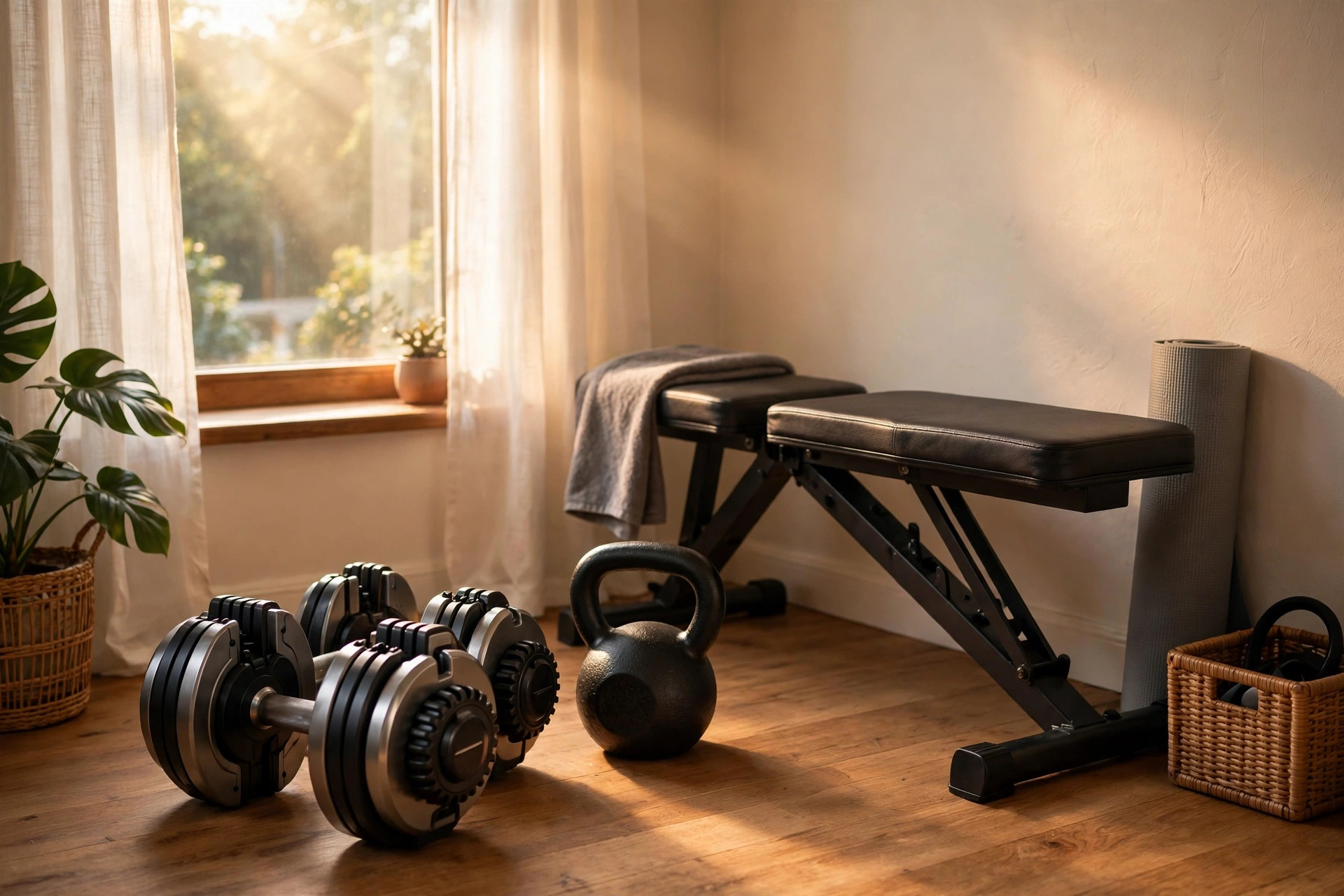
Pick your lane: cardio, strength, or recovery
Cardio, strength, and recovery are three different purchases, and the best deal in the wrong lane is an expensive coat rack. Cardio machines are the big-ticket items: expensive to ship, expensive to repair, wildly variable in actual use. Strength gear is cheaper, lasts decades, and never goes obsolete — a dumbbell is a dumbbell in 2040. Recovery is the cheapest lane, and the one where doorbusters are genuinely fine.
Be honest about the workout you will do in February, not the one you imagine in November. I have seen too many home treadmills become laundry racks by March. The treadmill nobody uses is not a deal at any price, while $300 of weights you lift three times a week is the best money in fitness. Building from scratch? Start with strength: the cost per workout is the lowest of any lane.
Price tiers worth waiting for
Treadmills price by motor and belt: $600-900 gets a folding walking treadmill — fine for walking, not running. $1,000-1,600 is the sweet spot for runner-worthy folding decks with 3.0+ HP and a 60-inch belt, and Black Friday takes $200-400 off that tier. Rowers are simpler: $500-700 for solid air and magnetic machines, with the Concept2-adjacent class clearing at $750-850 instead of $990.
Bikes split in two: spin bikes without subscriptions at $300-600 — the genuine doorbuster tier, honestly good bikes — and connected bikes at $1,200-1,500 that exist to sell you a $40-55/month plan. Adjustable dumbbells are the strength sweet spot: $200-350 per pair for the 5-to-52.5-lb class on Black Friday. Flat benches run $100-200; half racks start around $300.
Massage guns are the recovery doorbuster: $80-150 for a quality unit in November, down from $150-250. Be skeptical of the $40 no-name specials — the battery and motor quality is where the savings came from. Rollers and bands are cheap year-round; wait for a site-wide code.
The dumbbell rule: price per pound
Weight costs what it costs: new iron runs roughly $1-2 per pound. Compute the price per pound on any weight deal — a "bundle with free shipping" that costs more per pound than the going rate is not a deal, however nice the bundle sounds. When I ran the numbers on the adjustable pairs last November, the per-pound math is what separated the real discounts from the packaging.
Coated versus bare iron is a home-use question, not a quality one. Rubber or urethane coating protects floors and rusts less but costs more per pound; on a concrete garage floor, bare iron plus a rubber mat is the cheapest path. If the weights live upstairs, pay for coated — your floors will thank you.
Kettlebells play differently: one good bell beats three cheap ones. A single $80-120 quality kettlebell (35 or 53 lb) in November will outlast and outperform three $30 cast-iron specials. Buy the one you will actually swing.
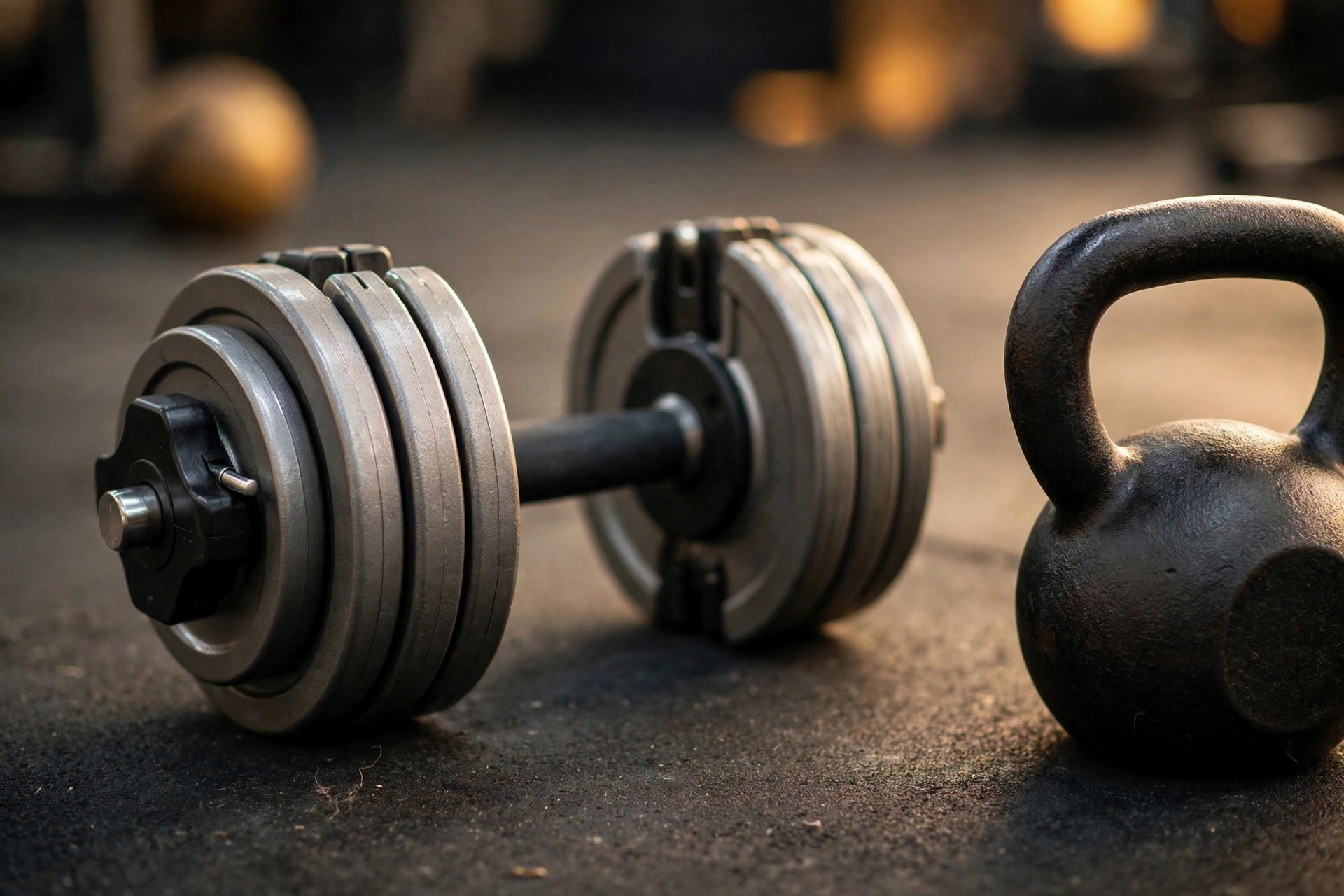
The warranty trap: read the residential fine print
"Lifetime frame warranty" usually means the welded steel — while the motor, electronics, belt, and labor, the parts that actually fail, carry 1-5 year terms with labor excluded after year one. A treadmill motor replacement runs $200-400. That is the real warranty math.
"Commercial grade" is marketing, not a standard. Check the weight rating and the motor's continuous-duty HP — not peak HP — instead. A 2.0 HP "commercial" motor is a walking treadmill in a costume; runners need 3.0-plus continuous.
Check the return policy before the price tag. A 150-lb treadmill costs $100-200 to ship back, and return-freight or restocking fees can erase the whole discount. Buying from a retailer with free return shipping is worth $100-150 of insurance on any machine you cannot try first.
The subscription trap: three-year math
Connected bikes, treadmills, and rowers are sold on hardware discounts and monetized on subscriptions: $39-55 a month for classes and leaderboards. Over three years, a $1,300 bike with a $44 plan costs about $2,900 — and when you cancel, the screen usually loses most of its features. You are buying the content, not the bike.
The comparison that matters: a $500 non-connected spin bike plus a $13/month standalone app costs under $1,000 over three years, with the same workouts. The connected premium buys the leaderboard and the social feed — decide whether those are worth $1,500-plus before the sale starts, not during it.
Buy for the machine, not the screen. Built-in touchscreens age faster than the equipment they are bolted to, and a locked-in proprietary display cannot be upgraded. A machine with a tablet holder and Bluetooth will outlive a machine with a built-in tablet you are stuck with for a decade.
Timing: strength in November, cardio in January
Black Friday week, November 27, is the annual floor for strength gear: adjustable dumbbells, benches, racks, and plates hit their lowest prices of the year, and quality massage guns doorbuster at $80-150. If you are building a strength setup, this is the buy week — January prices on strength gear are rarely better.
Cardio is the exception: January's resolution sales are historically the deepest discounts on treadmills, ellipticals, and rowers, with February close behind. Buy cardio on Black Friday only if the price matches or beats last January's precedent — otherwise wait seven weeks. I have tracked this long enough to stop feeling clever about November cardio purchases.
Cyber Monday, November 30, is for accessories: smartwatches and trackers, apps and subscriptions at annual-billing discounts, and recovery gear with site-wide codes. And the sleeper deal of the whole season: local January listings, when resolution quitters sell quality iron at 40-60 percent off. Strength gear does not wear out — inspect for rust and you are done.
Frequently asked questions
Is Black Friday a good time to buy fitness equipment?
Yes for strength gear — dumbbells, benches, and racks hit their annual floors on Black Friday week. Cardio is trickier: November discounts are real, but the absolute lowest treadmill and elliptical prices usually come in January's resolution sales.
Adjustable dumbbells or a full fixed set?
Adjustables win for nearly every home gym. One $200-350 pair replaces 15 fixed pairs that would cost $600-1,200 plus a rack and a wall of floor space. Buy fixed only if multiple lifters share the space.
Are subscription bikes and connected treadmills worth it?
Run the three-year math. A $1,300 bike plus a $44/month plan costs about $2,900 — you are buying the content, not the bike. A non-connected machine plus a standalone app usually halves the running cost.