
Black Friday 2026 Cameras & Drones Guide: Body Tiers, the Lens Rule, and the Kit-Lens Trap
Camera gear is the category where the sticker price lies to you twice: once about the camera, once about everything you need to make the camera work. The body is the cheap part of the system — lenses, batteries, and memory cost more than the body over time — and November’s best deals are rarely the camera everyone is talking about. They are the one-generation-old model quietly sitting at its annual floor.
Here is how I would buy camera gear in November: pick the body type that matches how you actually shoot, know the real price tiers, budget for glass before you budget for the body, spot the kit-lens and megapixel traps, check the refurbished route, and if you want a drone, learn the rules before you buy the toy. Black Friday is November 27, 2026; Cyber Monday is November 30.
Pick your body type first: mirrorless, action cam, or drone
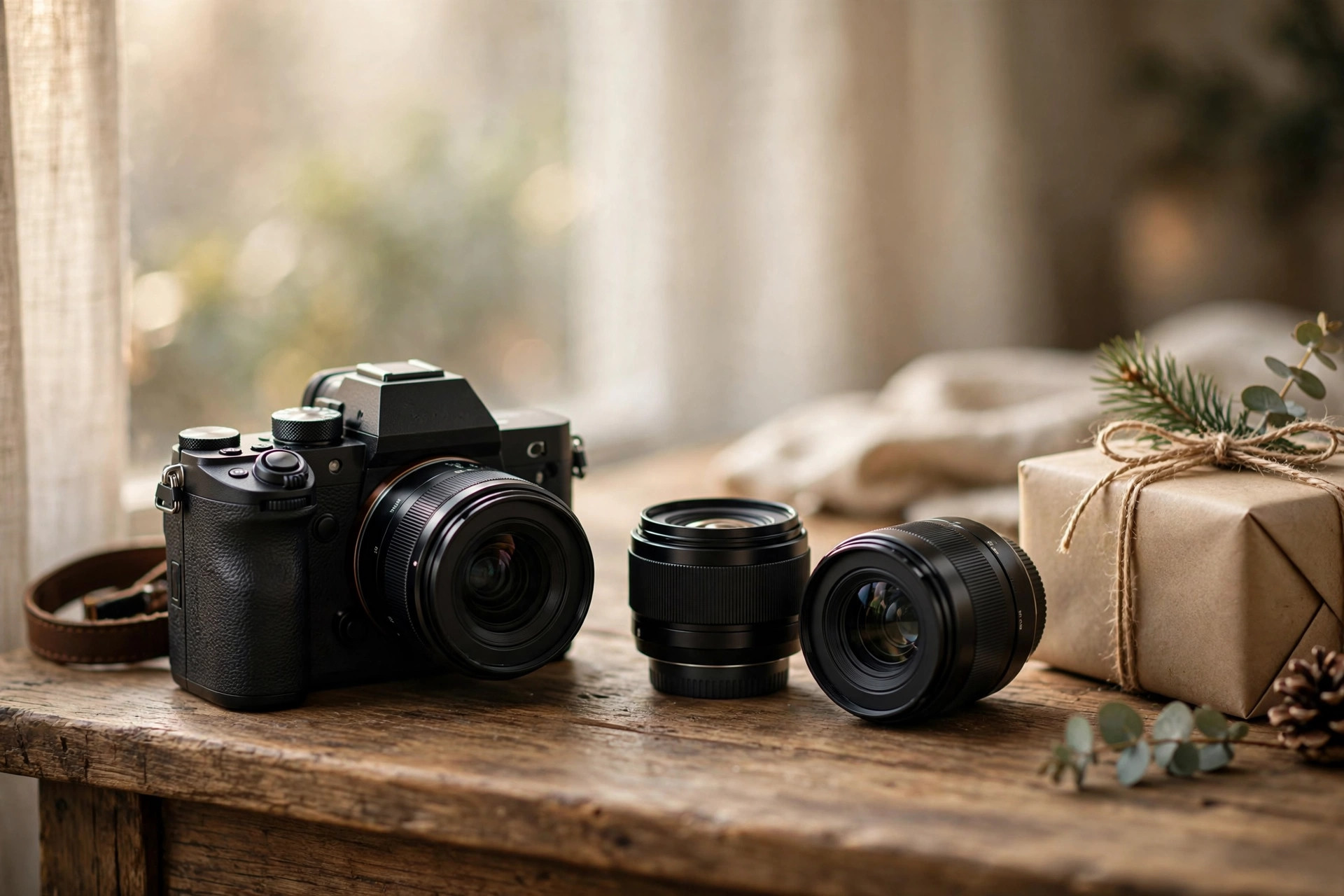
The body-type decision is the whole purchase. Mirrorless cameras are the real-deal systems: interchangeable lenses, big sensors, and a price ladder from $400 entry kits to $2,000 pro bodies. Action cameras are the waterproof fun option — great for the price, hopeless for portraits. Drones are flying cameras with a legal regime attached. In my experience, most people shopping a “camera deal” would be happier with a different category than the one they clicked on: the family vacation shooter wants an action cam or a phone, not a $1,200 mirrorless kit.
Buy the mount, not the body. Every mirrorless body locks you into a lens ecosystem — Sony E, Canon RF, Nikon Z — and switching systems later costs thousands. Before comparing bodies, check the used-lens market for the mount you are considering. A cheap body with expensive glass is a trap; a mid-range body with a deep used-lens catalog is a bargain that keeps paying.
Skip the abandoned mounts. Some older mirrorless lines still appear in November flyers at tempting prices, but if the manufacturer has stopped making new lenses for the mount, you are buying into a dead end. The discount is the manufacturer’s exit price, not your savings.
Price tiers worth waiting for
Entry APS-C kits ($400-600) are the honest November doorbusters: last year’s mid-range bodies repackaged with a kit lens at genuinely lower prices. A $500 kit that sold for $700 in the spring is a real deal — and a better camera than anything cheaper.
Mid-tier full-frame bundles ($1,200-1,800) are where November gets interesting: $200-300 bundle discounts on bodies that rarely move, often with a second lens or a battery thrown in. Do the bundle math line by line, though. The “free” extras are priced at retail; a $1,500 bundle with $400 of inflated accessories is a $1,300 camera deal.
Action-cam doorbusters are the simplest math in the category: $50-100 off the current model, bigger cuts on last year’s. Drone pricing follows weight class — sub-250g models dodge the registration requirement and sell at a premium; the heavier camera drones discount harder but come with paperwork.
The lens rule: budget twice the body, skip the kit lens
Here is the number that matters: over five years, you will spend roughly twice the body’s price on lenses. Budget for glass first. A $600 body with a $400 prime lens takes better photos than a $1,200 body with a mediocre zoom — I have watched this play out in side-by-side shots more times than I can count. Lenses also outlive bodies by a decade; the body is the depreciating asset.
The kit lens is the compromise nobody asked for. It is slow, soft at the edges, and bundled because it makes the headline price look complete. The classic move: buy the body only, and put the kit-lens money toward one fast prime. Your photos will look like they came from a camera twice the price.
The megapixel myth is the other spec trap: sensor size beats megapixel count for image quality every time. A 20-megapixel full-frame sensor destroys a 48-megapixel phone sensor in low light. And the “free accessories” box — the bag, the tripod, the 37 filters — is packing material with a retail price attached. Ignore it.
Refurbished is the sleeper deal
Manufacturer-refurbished cameras are the best-kept secret in the category: bodies 15-25 percent below new with the same factory warranty, inspected and cleaned by the people who built them. When I priced out a mid-tier mirrorless last November, the refurbished body was $280 less than the Black Friday new price — same warranty, same shutter-count reset, nobody could tell it from new.
Lenses hold value even better — good glass barely depreciates — so refurbished or used lenses from reputable dealers are often the smarter buy than a discounted new body. The glass is where the image comes from; the body is where the money goes.
The one refurb to avoid: gray-market imports with no stated warranty. If the listing cannot tell you the warranty terms in writing, it is not a refurbished camera. It is a gamble with a shutter button.
The drone fine print: registration, batteries, and where you can fly
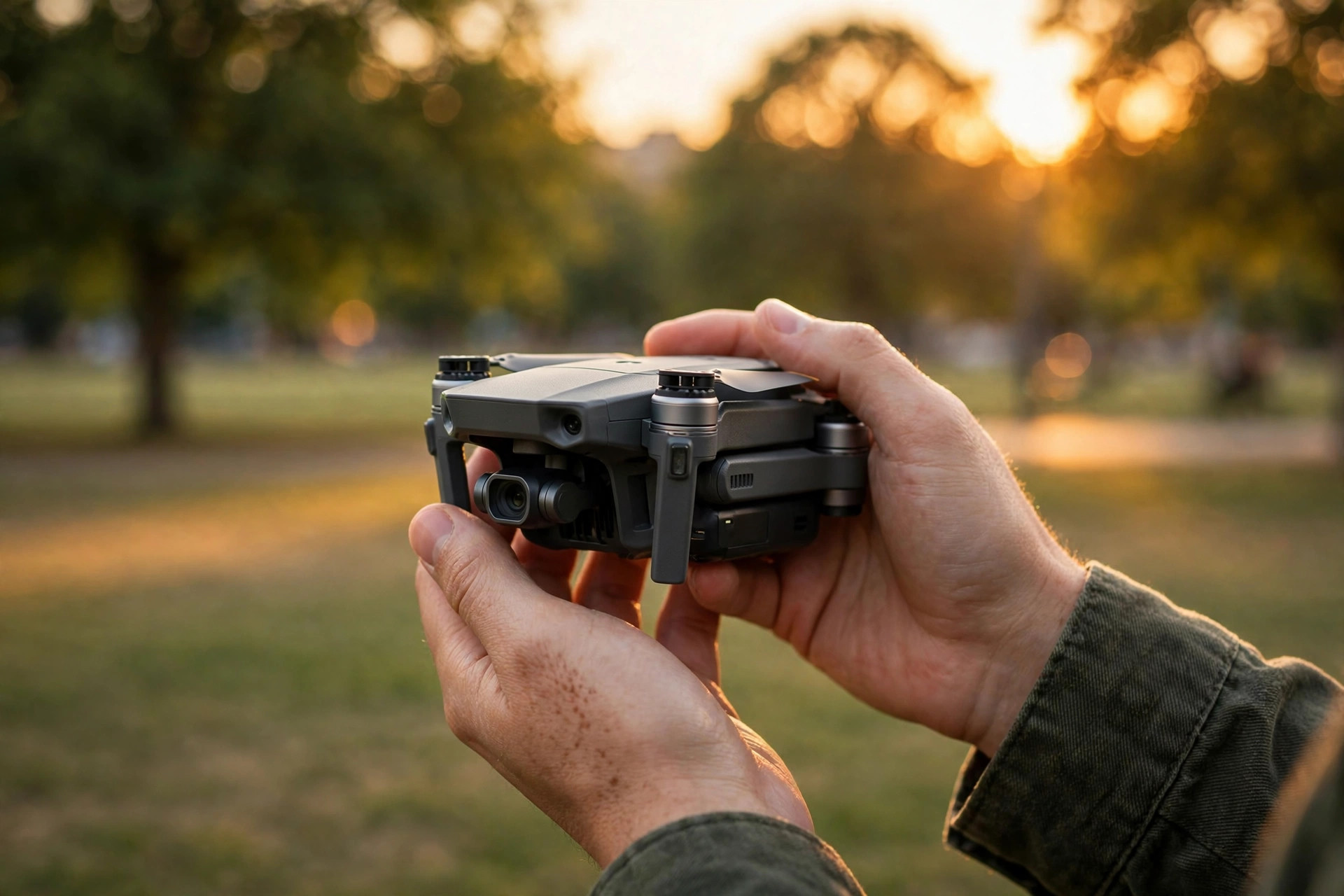
Drones come with homework. Anything 250 grams or heavier — 0.55 pounds — must be registered with the FAA, and the free TRUST test is required before you fly. This is not optional paperwork; it is the law, and retailers will happily sell you a 300g drone without mentioning it.
Budget for batteries, plural: one battery is twenty-five minutes of flight, which is one battery of disappointment. The bundle math matters — a two- or three-battery kit at a small premium is worth more than a bigger discount on the single-battery box. When I flew my first drone on one battery, I spent more time charging than flying.
And check where you can actually fly before you buy: airports, national parks, and stadiums are no-fly zones, and plenty of suburbs sit under controlled airspace. The prettiest drone deal in the world is useless if your backyard needs authorization you will never get. Class matters too — Class 1 and 2 drones fly on most trails; Class 3 is the heavier, faster tier with more restrictions.
Timing: when camera gear goes on sale
Early November is for the popular bodies: the current-generation mid-tier cameras that sell out by Thanksgiving week. If you know the exact body you want, the preview sales are your window — the price is usually the same as Black Friday week, with the inventory still intact.
Black Friday week, November 27, is the bundle peak: the deepest cuts on last-generation flagships and the kit bundles with real extras. This is when the $1,800 body becomes a $1,500 bundle, and it is the week to watch for the manufacturer-rebate stacks that do not appear any other month.
Cyber Monday, November 30, is for accessories and refurbs: memory cards, bags, tripods, and the refurbished stock that gets repriced after the weekend rush. The pattern I have watched for years: bodies peak Friday week, everything around the body peaks Monday.
Frequently asked questions
Is Black Friday a good time to buy a camera?
Yes for last-generation bodies and bundles — they hit annual floors during Black Friday week, and manufacturer rebates stack. Current-generation flagships rarely discount deeply this soon after launch; what you get instead are bundle deals with inflated accessory pricing.
Should I buy the camera kit or body and lens separately?
Buy the body only and put the kit-lens money toward one fast prime — the kit zoom is slow and soft, and a $300 prime on a $600 body outshoots a $1,200 body with the kit lens. Lenses outlive bodies by a decade, so the glass is the investment.
What do I need to know before buying my first drone?
Three things: drones 250g or heavier need FAA registration plus the free TRUST test; budget for two to three batteries because one is 25 minutes of flight; and check no-fly zones before buying — airports, national parks, and stadiums are off-limits, and suburbs often sit in controlled airspace.