
Should You Join a Store’s Free Loyalty Program?
The cashier’s pitch takes eight seconds: “Do you have our rewards card? It’s free — you get points on everything.” I said yes to the first one in a grocery checkout line, and then, because it was free, I said yes to five more. Two years later, four of those accounts were sitting at twelve points and a pile of unread promo emails. One was quietly saving me real money. The difference taught me everything in this guide.
Free loyalty programs are the softest sell in retail: no credit pull, no annual fee, no fine-print APR. That does not make them neutral. They pay you in points worth about one percent, they charge you in purchase data, and they are engineered to make you spend more. Here is the real math, the data trade, and the one rule that decides whether a program is a tool or a trap.
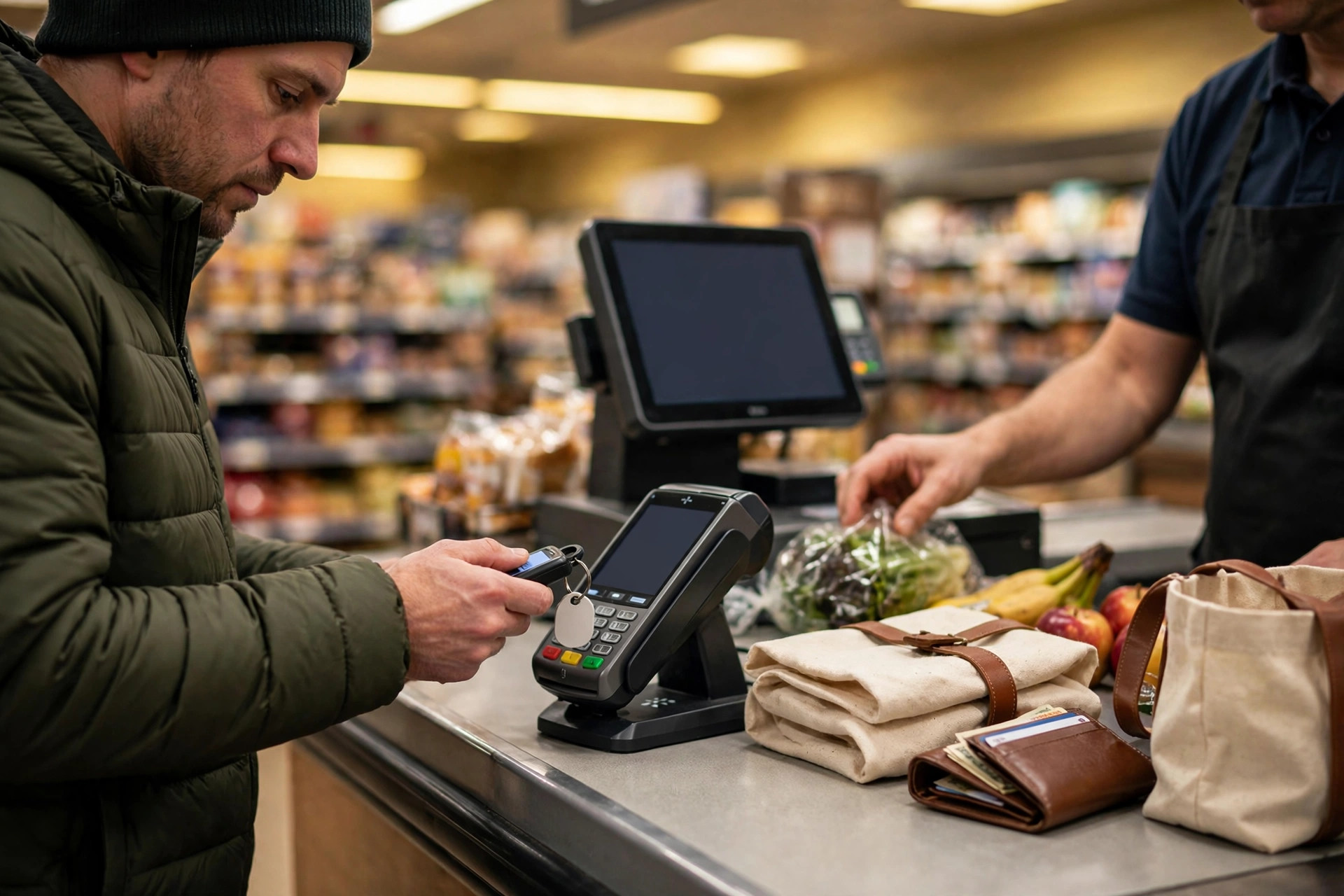
The points math: most programs pay you about 1 percent
Strip away the branding and almost every free loyalty program works the same way: you earn one point per dollar, and one hundred points are worth about a dollar. That is one percent back — a flat, honest number that makes the program easy to evaluate. Some grocery programs pay closer to two percent once you clear a quarterly spending tier, and a few hand out $5-off coupons at thresholds that work out to 1.5 percent. I have never seen a free program beat two percent on ordinary purchases.
Stack that against what you already carry. A plain no-annual-fee two-percent cashback card beats almost every free loyalty program on raw math, at every store, with no tiers and no expiring points. I ran the numbers on my own grocery program last year: roughly $300 a month in spending came back as about $37 in rewards — 1.03 percent. The points did not make groceries cheaper; they just made me feel loyal to one store while a flat two-percent card would have paid me double.
Two things still make the programs worth joining. First, the welcome coupon — many hand you $5 to $10 off just for signing up. Second, member-only pricing on staples: the “rewards member” price is often the real price, and the nonmember price is a penalty for not scanning. When I do my weekly shop, the member prices on produce alone usually beat anything the points are worth.
What you actually pay: your purchase history
Free programs are not charities; they are data collection with a checkout-line onboarding flow. The whole point of the card, the key tag, and the app barcode is to tie every basket to a single identity: what you buy, when you buy it, what you stopped buying. That dossier gets used to pick which coupons you see, to model how price-sensitive your household is, and — per most programs’ privacy policies — it can be shared with marketing partners and data brokers.
I am not telling you to refuse on principle. The same dossier is why you get the “we noticed you buy oat milk” $2-off coupon that actually saves you money. What I do is keep the data cheap: a dedicated email address for every loyalty account, because the promo flood is the program’s second price, and I never link a store credit card to a free loyalty account unless the program requires it.
One more quiet cost: the phone-number signup. Plenty of programs let you join with just an email and scan a barcode; the phone number is optional data they would very much like to have. I give it only where the program genuinely will not work without it — which, in my experience, is almost never.
The spending-up trap: tiers, bonus events, and expiring points
Here is where free stops being free. Tiered programs (“spend $500 this quarter to unlock Gold status”) exist to make you consolidate spending you would have spread around — and to push a few extra trips over the line in the last two weeks of the quarter. Bonus-point events (“earn 4x points on everything this weekend”) are engineered to make off-list purchases feel like savings. And points that expire after twelve months of inactivity quietly transfer your earned value back to the store.
I have watched myself do this one: driving past a competing store I preferred because my “home” store was running a bonus weekend. The points were worth maybe $2. The detour cost me twenty minutes. Points are a discount on what you were going to buy anyway — the moment they become the reason you are buying, the program is winning and you are losing.
My discipline rule is simple and it has never failed me: I never spend to earn. If a tier is out of reach at my normal pace, I do not chase it. If a bonus event covers nothing on my list, I ignore it. And every January I let one dead program expire on purpose, just to prove to myself that I can.
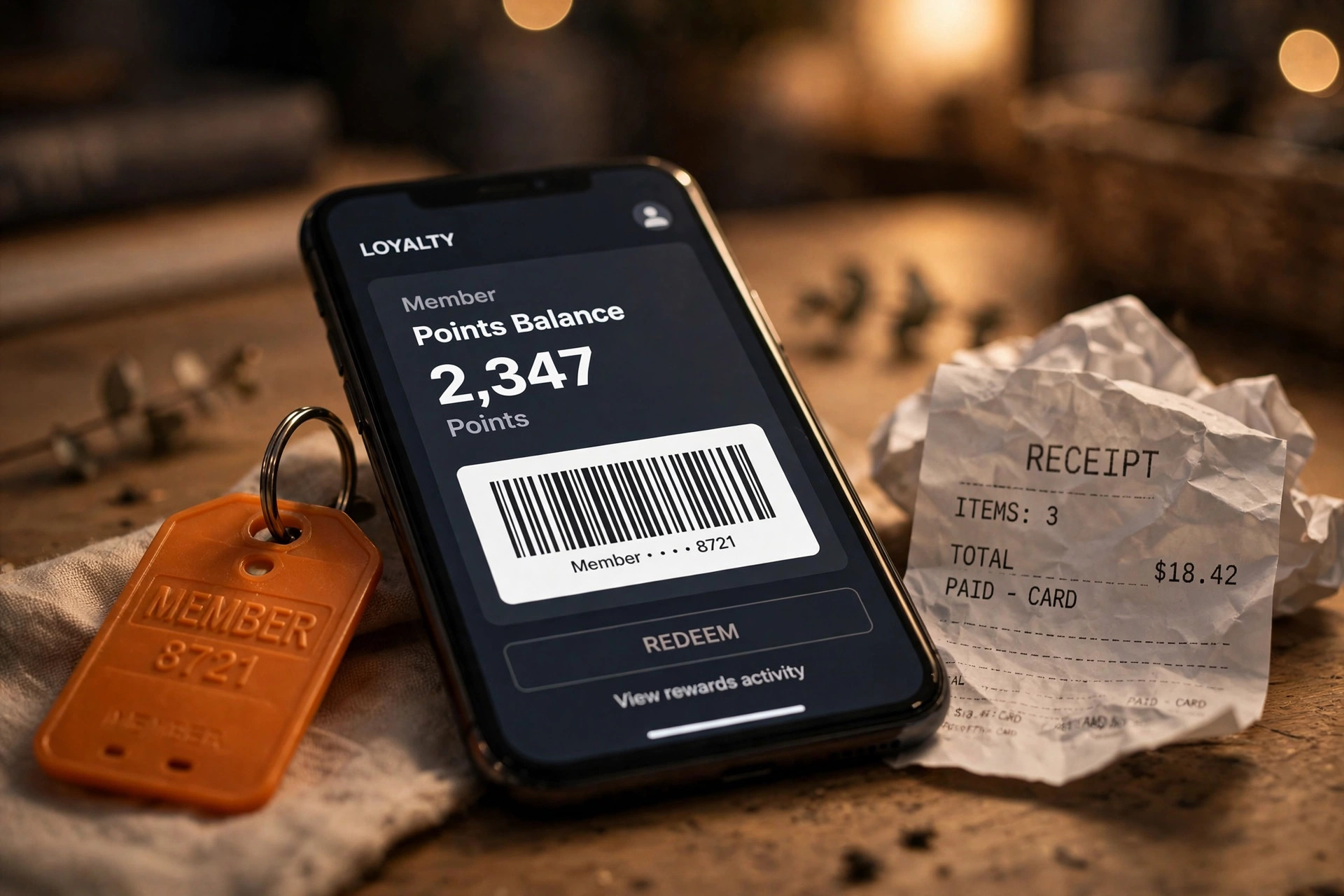
How I run my programs: the one-program-per-store rule
I keep exactly one free loyalty account per store I shop at least monthly, and zero everywhere else. The signup takes ninety seconds in the app while I am already in the parking lot — not in the checkout line with people behind me. The barcode lives in the retailer’s app or my wallet app, never as a plastic key tag rattling on my keychain.
Then I let the programs do the one thing they are genuinely good at: stacking. Loyalty member pricing stacks with manufacturer coupons and cashback portals — the three discounts come from three different budgets, and none of them knows about the others. My stacking order is store coupon first (it comes off the shelf price), member pricing second, and the cashback portal last on whatever is left.
And I audit once a year. Any program where I earned nothing, redeemed nothing, and got only promo emails gets deleted — account closed, emails unsubscribed. Last January’s audit killed three programs and I have not missed a single one. Your attention is worth more than a one-percent rebate, and dead programs keep charging it.
When it actually pays (and when to skip)
Join freely when you shop somewhere at least monthly: grocery, pharmacy, the pet store. Those are the programs where member pricing and the points actually compound. Tiered fuel programs are the other standout — grocery points that knock a dollar off per gallon at the pump can beat every other reward in this guide on a single fill-up.
Skip everything else. The one-off furniture store you will visit twice, the program that requires linking a credit card for the “full” rewards, the paid tier that promises to “unlock” the good version of the free program you just joined. And do not confuse the free program with the store’s credit card — that is a different animal with a hard inquiry and a high APR, and it deserves its own sixty-second decision.
The honest summary: free loyalty is a one-percent rebate in exchange for your purchase history and your attention. That is a fair trade at your regular stores and a bad one everywhere else. One program per store you actually visit, never spend to earn, audit every January — and the programs stay tools instead of traps.
Frequently asked questions
Do loyalty points expire?
Usually yes — most programs expire points after 12 to 24 months of inactivity, and promotional bonus points often die faster. Earning or redeeming even a tiny amount usually resets the clock. I keep a January reminder to either redeem or let dead programs lapse on purpose.
Is the member price the real price, or a fake discount?
Treat the member price as the real price. The higher nonmember shelf price is effectively a penalty for not scanning, and it makes the “discount” look bigger than it is. Always compare the member price against a rival store before assuming it is a deal.
Is a free loyalty program safer than a store credit card?
In the ways that matter, yes: no credit pull, no balance to carry, no interest rate. The loyalty risk is your data and your spending habits, not your credit file. Join free programs freely at stores you visit monthly — and run a separate three-check test before ever saying yes to the credit card.