
Free Shipping Thresholds: The $35 Rule That Quietly Taxes Your Deals
Everybody reads the product price and almost nobody reads the shipping line, which is exactly backwards. A $24.99 gadget with $6.95 shipping is not a $24.99 gadget — it is a $31.94 gadget, and you just paid a 28 percent surcharge to have it travel to you. The free-shipping threshold — that familiar "free shipping on orders over $35" banner — is the one number on the page that decides whether the deal you found is real.
I learned this the hard way years ago, padding a $29 cart with a $12 phone case I never used to dodge a $6.95 fee. I "saved" $6.95 and spent $12 to do it. Once I started doing the threshold math honestly at every checkout, it changed how I shop online — and it will change yours, because the math is simpler than the banner makes it look.
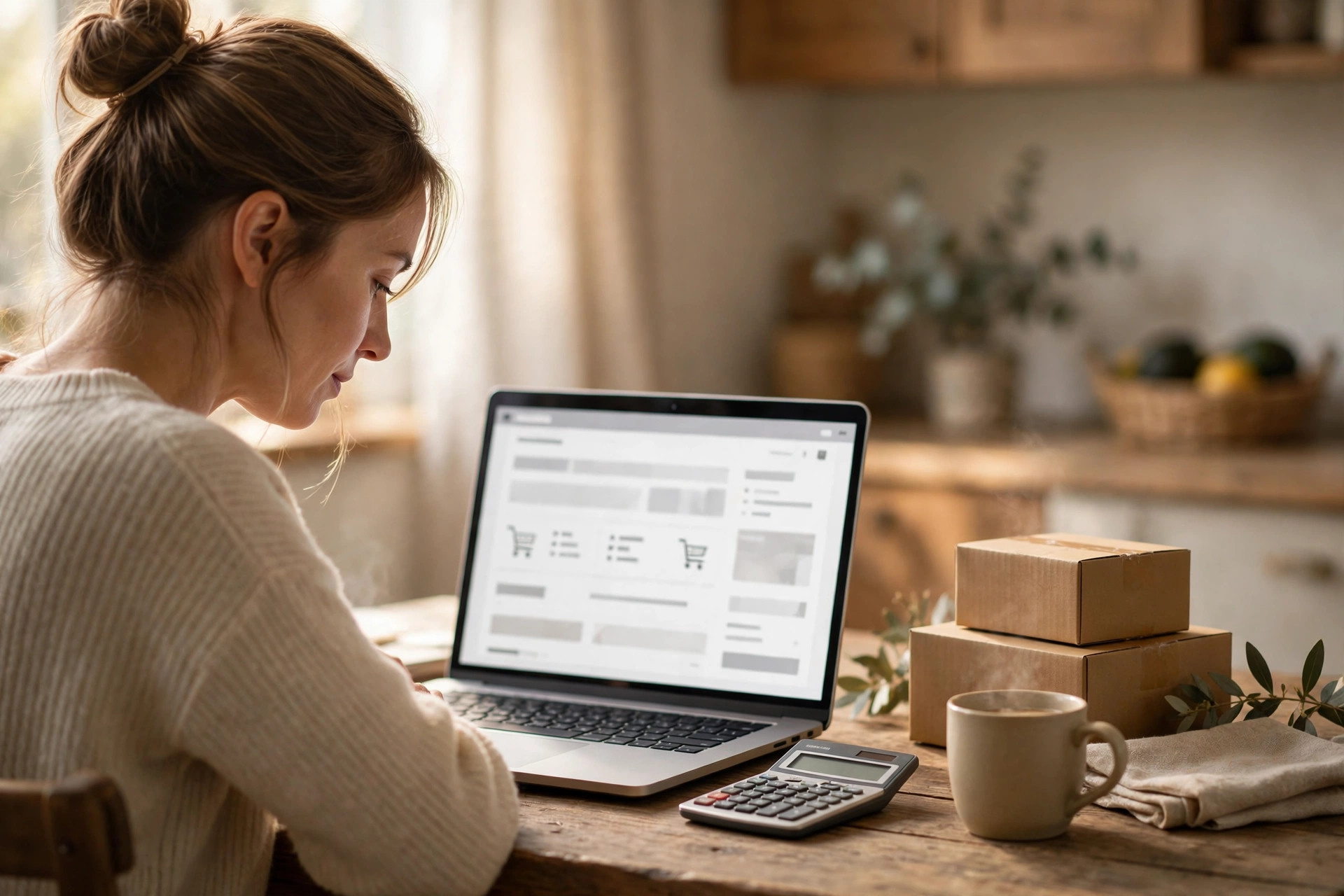
Why the threshold exists at all
Moving a parcel costs real money — roughly $6 to $10 for a typical ground package once you count the box, the labor, and the carrier. On a $20 order, that is a third of the revenue gone before the store keeps a dime. The threshold is the store’s answer: instead of charging you for shipping, it sets a minimum order size where the average basket is profitable enough to absorb the cost.
Seen that way, "free shipping" is a slight misnomer. It is not free; it is bundled. The store worked out that at $35 a basket, enough margin survives to eat the parcel cost and still keep you as a customer. The banner is a carrot, but it is also a measuring stick — and knowing which one it is at any given checkout is the whole game.
This is why the bar sits where it does. A store is not being generous or stingy; it is tuning the average order. Your job is to respond to the tuned number without letting it tune you.
Do the honest math at checkout
The rule I run on every order: price the item with shipping included, always. The $24.99 gadget with $6.95 shipping is $31.94. The competing listing at $29.99 with free shipping is $29.99 — it wins, even though its sticker is higher. I have watched friends lose this comparison for years because the bigger number felt like the worse deal. The delivered price is the only price.
Then compare the threshold path honestly. Your cart is $29, the bar is $35, shipping is $6.95. Adding a $7 item you genuinely need — one that was already on your list — costs you $36 total with no fee, and you got something useful. That is the threshold working for you. But the math flips the moment the filler was not on your list: then you did not dodge a fee, you bought something you did not want.
And watch the percentage, not just the dollars. A $4.95 shipping fee on a $60 order is noise — under 10 percent. The same fee on a $15 order is a 33 percent tax, and suddenly the "cheap" find is the most expensive option on the page. The smaller the order, the more the shipping line owns the deal.
The padding trap
The padding trap is the threshold’s business model, and I have funded it plenty. You are $6 short of the bar, the fee is $6.95, and the site helpfully suggests a $12 filler. You buy it, the fee vanishes, and you feel clever. But you did not save $6.95 — you spent $12 to avoid spending $6.95. The fee was cheaper than the cure.
I have a junk drawer full of the evidence: cables for ports I do not have, a third phone stand, sample-size snacks. None of it was a good deal at any price, because a good deal is a low price on something you wanted. Filler is the opposite — a full-price purchase of something you never wanted, wearing a "free shipping" costume.
The defense is a single question at checkout: was this item on my list before the threshold appeared? If yes, add it and take the free shipping with my blessing. If no, the fee is almost always the cheaper answer — or the order can wait.
The free-shipping subscription break-even
Then there are the memberships: pay roughly $100 to $140 a year, or around $13 to $15 a month, and every order ships free. Whether that pays is pure arithmetic, and most people never run it. At $6.95 of avoided shipping per order, a $130 annual plan needs about nineteen orders a year — roughly one every three weeks — before it beats just paying the fee. Below that pace, you bought the privilege of overpaying.
I audited my own orders one January and found fourteen in a year — not enough. I dropped the membership and started batching orders instead, which cost me nothing and saved the fee most months anyway. The audit takes ten minutes: scroll last year’s order history, count the orders, multiply by the typical fee. If the membership costs more than the fees it would have erased, it is a loyalty program wearing a discount costume.
One more wrinkle: these plans only erase shipping, not raise prices. I have caught items priced a few dollars higher on the same storefront under the membership banner — the fee disappeared and the margin moved into the price. If you subscribe, spot-check a few prices against the guest checkout before you assume every order is a win.
The legit ways to hit the bar
None of this means thresholds are the enemy. They are a pricing mechanic, and mechanics can be played honestly. The plays that actually work are boring: keep a running list of things you will need soon — batteries, the filter, the birthday card — and when a real purchase lands you near the bar, raid the list instead of the suggestions row. The list turns padding into planning.
Ship-to-store or curbside pickup is the cleanest free option where it exists: no threshold, no fee, and the store eats the cost gladly. Time it with an errand you were running anyway and it is genuinely free. And for gifts and holidays, consolidate: three gifts from one store in one box clears most bars and arrives together, which is better logistics and a better unboxing than three separate parcels.
My standing rule, the one I wish someone had given me a decade ago: never add an item to hit a threshold unless it was already going to be bought. Everything else — the filler, the "while I’m here" — is the store’s upsell, not your savings. Free shipping is only free when you were spending the money anyway.
Frequently asked questions
Why do free-shipping thresholds differ from store to store?
Margins, mostly. Stores with fat margins or light, cheap-to-ship goods can afford a $25 bar; sellers of heavy or low-margin items need $50 or $75. The threshold is tuned to push the average order up to the size where the shipping cost disappears into the margin.
Is ship-to-store or pickup really free?
Usually yes — and the store is happy to offer it, because picking up your order gets you through the door, where most people buy something else. The honest tradeoff is your time and fuel: if the round trip costs you an hour, a $5.95 shipping fee was the cheaper option.
When is it fine to just pay for shipping?
When the alternative costs more. A $6.95 fee to lock in a scarce item at a real discount beats a stockout; a $12 filler to avoid that fee is the expensive choice. Pay the shipping when the item matters and walk away from the threshold game when it does not.