
Black Friday 2026 Mattress Guide: Foam vs Hybrid, Price Floors, and the Trial Fine Print
Black Friday is the single biggest mattress sale of the year. The bed-in-a-box brands and the legacy makers all drop their deepest discounts at once, usually 25–40% off with bedding bundles thrown in. I have slept on four Black Friday mattresses over the years, and November was genuinely the cheapest week for three of them.
But mattresses are one of the hardest products to shop honestly. Every retailer sells the "same" mattress under a different name so you cannot price-compare, the specs that matter are buried, and a 100-night trial can hide a $99 return fee. Here is how to cut through it.

Pick the type first, price second
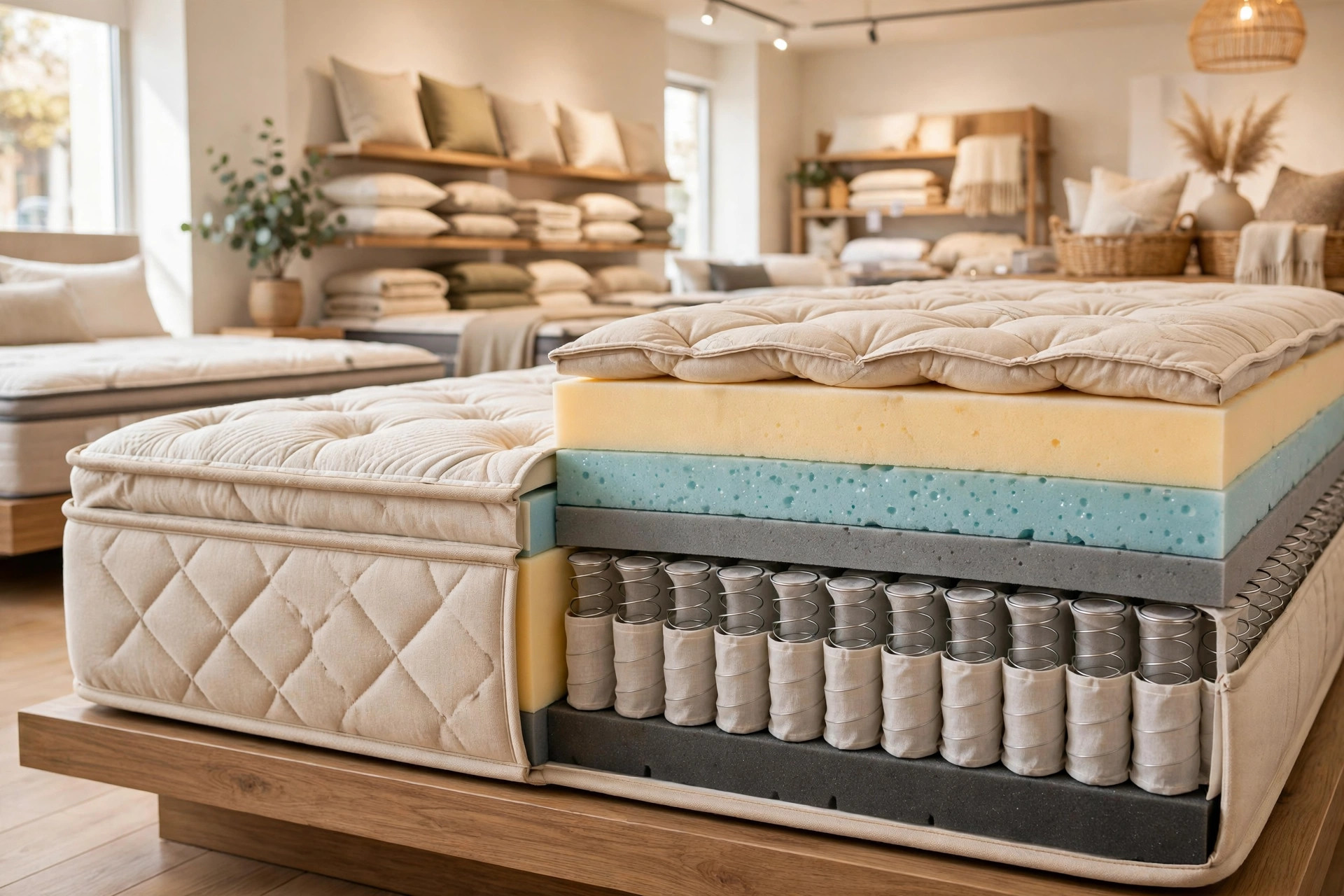
Memory foam (all-foam) is the bed-in-a-box classic: great pressure relief, great motion isolation, and the heat-trapping reputation that cooling infusions only partly fix. Sleep hot? Lean hybrid. Hybrids pair foam comfort layers with a pocketed-coil base, so they are bouncier, cooler, and better at the edge than all-foam, and the sweet spot for most couples. Traditional innerspring is the budget tier now: fine for a guest room, but the cheap ones sag fast.
Latex is the sleeper pick: naturally cool, absurdly durable (15-plus years), and the most expensive upfront. Black Friday is one of the few times latex sees a real sale. Within any type, the spec that predicts longevity is foam density: 1.8 lb per cubic foot or higher for base foams, 3–5 for memory-foam comfort layers. In my experience, if a brand will not publish its density numbers, that tells you everything.
Firmness is personal, and it is the top reason trials get used. Side sleepers usually want medium-soft, back sleepers medium-firm, stomach sleepers firm. There is no deal on a mattress you cannot sleep on: 30% off the wrong firmness is a return, not a bargain.
Queen price floors worth waiting for
Bed-in-a-box all-foam queens hit their floors at $400–700 during Black Friday week. Brands that list at $900–1,200 all year land here. Mid-tier hybrids, the category most people should actually buy, drop to $800–1,200 for queens (down from $1,400–2,000 list). Premium hybrids and latex queens fall to $1,500–2,500, and the legacy luxury flagships finally move off their never-on-sale stance with 25–30% off plus bundles.
Mattress discount math is more honest than most categories. Thirty percent off in November is usually a genuinely lower price than the fake 30% offs of September, because the whole industry coordinates its biggest promotions around the same holiday weekends. Still, compare against the brand's own site, not the inflated MSRP.
Kings run roughly 25–35% above queen. And if an adjustable base is in your future, check the base maker's thickness limit first. Some "adjustable-friendly" mattresses merely mean "will bend without voiding the warranty."
The foundation upsell trap
Retailers make their margin under and around the mattress. The classic: a mattress bundled with a "free" $400 adjustable base, two "$150" pillows, and a mattress protector. Then you look closer and the base was $250 on the brand's own site in October while the pillows are bulk polyester. Price every bundle component separately before you celebrate; I have done this math on a "free base" bundle and the savings evaporated on contact.
You might not need a new foundation at all. Most modern mattresses work on a platform bed or on slats under 3 inches apart. What voids warranties is a sagging old box spring with wide gaps. Measure your slat spacing before buying a $200 foundation you do not need. And the plain steel platform frames that sell for $60–100 year-round rarely see a meaningful Black Friday discount.
Adjustable bases are the legitimate upsell. They genuinely go on sale for Black Friday (entry models $300–500, split kings $800–1,200), and zero-gravity positioning helps snorers and reflux. But buy the base on its own specs, weight capacity and motor warranty, not because it was thrown into a bundle photo.
The trial and return fine print
The 100-night trial is real, and it is the best consumer protection in the industry. But the details vary enormously. Most bed-in-a-box brands require a 30-night break-in before you can start a return, and skipping it voids the trial. Returns are usually free pickup with donation or disposal handled by the company. That is the standard I would demand.
The traps: a few brands charge return or "restocking" fees up to $99, some require you to keep the original packaging or arrange your own donation, and comfort exchanges (swapping firmness instead of returning) sometimes reset the trial clock and sometimes do not. Read the trial terms before you buy, not when you are already sleeping badly.
Brick-and-mortar trials are weaker. Many stores offer 30–90 day exchanges only (not refunds), charge exchange fees, and limit you to one swap. A Black Friday doorbuster at a furniture chain with an exchange-only policy is a riskier bet than the same discount online with a real trial. Price that risk in.
The name shell game, and when to buy
Mattress makers rename the identical mattress for every retailer. The same hybrid is the "CloudRest Plush" at one chain and the "DreamWeave Medium" at another, precisely so you cannot comparison-shop. Ignore the names entirely and compare the build sheet: comfort-layer thicknesses and densities, coil count and gauge, and total height.
Coil counts are the most abused spec. A queen with 800 pocketed coils is a real number; "2,000 coils!" usually counts micro-coils in the comfort layer or just multiplies zones. What matters is gauge (lower number means thicker steel; 13–15 is the normal range) and whether the coils are individually pocketed. A 1,000-coil pocketed queen at 14 gauge beats a "2,500-coil" marketing number every time. When two mattresses share a build sheet and differ in price, buy the cheaper one. You have just beaten the shell game.
On timing: early-November preview sales launch Black Friday pricing weeks early. It is less picked-over, and delivery arrives before the holiday shipping crunch. Black Friday week is the peak: the deepest discounts, the richest bundles, and the occasional sold-through popular firmness. Cyber Monday is the bundle-clearance day. After that, prices float back up until Presidents' Day, the next real sale. If you miss the window, waiting beats buying at January prices.
Frequently asked questions
All-foam, hybrid, innerspring, or latex?
Side sleepers do best on softer hybrids, back and stomach sleepers on firmer builds. Foam density — not just thickness — is the spec that predicts longevity.
What is a good Black Friday mattress price?
Queen price floors: $400–700 for bed-in-a-box, $800–1,200 for mid-tier hybrids, $1,500–2,500 for premium models.
Can I return a mattress bought on sale?
Read the trial fine print. Thirty-night break-in rules are common, and some retailers charge return fees or allow exchanges only — know the policy before you buy.