
How to Buy Refurbished & Open-Box Deals With Confidence
Refurbished is the best-value shelf in electronics — and the most misunderstood one. A certified laptop at 40% off is the same machine, tested to the same spec, with a shorter warranty. A random third-party “refurbished” tablet at 15% off is a used tablet with a sticker. Both are legal. The label only tells you who touched the product last and what they promise — nothing more.
I have bought refurbished for years: laptops, headphones, phones, a vacuum that is still going strong. Below is the ladder of what each label really means, the one rule (warranty length) that sorts the safe listings from the traps, the battery problem that ruins otherwise great deals, the price test that decides refurbished vs new, and the few categories where I refuse to buy secondhand at any discount.

The labels: open-box, refurbished, and certified
Open-box means someone bought it, opened it, and brought it back: a floor model, a gift return, a color swap. The item was barely used; it gets inspected, repackaged, and sold at 10–25% off. In my experience this is the safest discount tier — the standard return policy usually still applies, and the failure rate is barely above new.
Refurbished means someone worked on it: returned units that were repaired, cleaned, tested, and resold. The range is enormous, because “refurbished” is not a certification — it is a claim. A manufacturer refurb program tests against the original spec, replaces wear parts, and backs it with a real warranty. A random seller calling a wiped-down used phone “refurbished” is making the same claim with none of the same machinery.
Certified is the word that costs the seller something. Certified programs — the manufacturer’s own, or the store’s own — require named testing, a minimum warranty (usually a year), and a grader you can look up. When I see “certified” with the certifier named, I treat it as close to new. When I see “refurbished” with no grader named, I read the warranty paragraph first — that is the tell.
The warranty is the real product
Here is my one sorting rule: the warranty length is the product. Certified refurbs typically carry a year — the seller is confident enough to bet a year on it. Good third-party refurb warranties run 90 days. Anything shorter than 90 days is the seller telling you they do not want it back. When I tested this rule against my own buying history, every bad refurb I ever bought had a short warranty and every good one had a long one. It is the fastest read on any listing.
Check what the warranty covers before you trust the number. Battery coverage is the part that gets carved out — some warranties cover everything except the battery, which is the most likely thing to fail. Screen and hinge coverage matters on laptops; sensor and shutter coverage on cameras. A 90-day warranty that covers the whole device beats a 1-year warranty with a page of exclusions.
Read the return window separately, because warranty and returns are different doors. The warranty fixes the device over months; the return window lets you send it back in the first few weeks if it arrives wrong. My rule: never buy refurbished from a seller whose return window is under two weeks. The first week is your inspection period — stress-test the battery, the ports, and the screen, and keep a clean exit if it fails.
The battery problem — and the rule that solves it
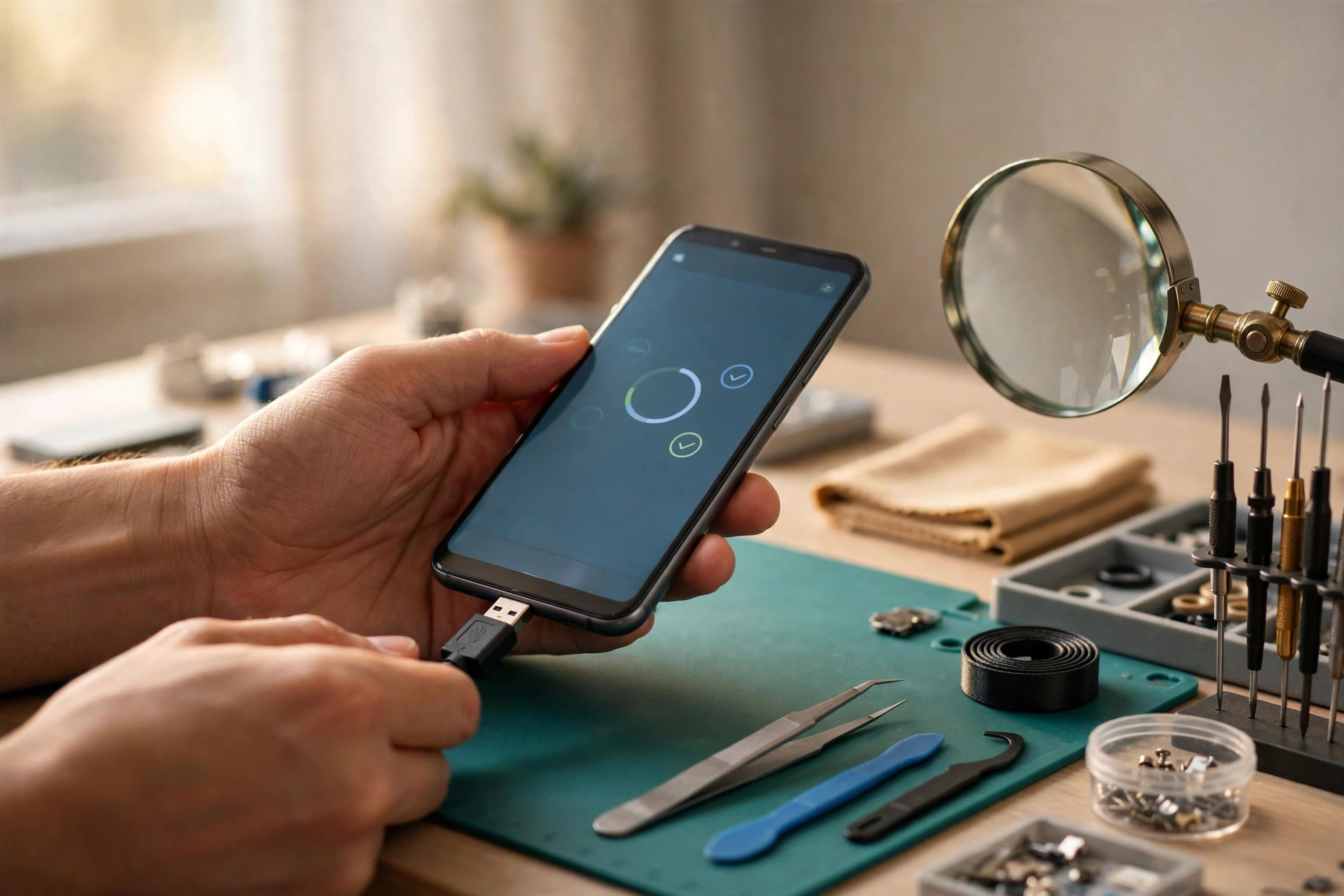
Batteries are the hidden depreciation in every refurbished device. A phone or laptop battery loses a few percent of capacity per year, and the refurbisher may or may not have replaced it. A two-year-old flagship with its original battery is a $300 machine that dies at 3pm — the savings evaporate into a battery replacement or an early upgrade.
The fix is the battery rule: only buy battery-powered refurb where the battery was replaced or guaranteed. Certified programs usually guarantee 80%+ capacity at purchase. For laptops and phones, look for a stated cycle count or battery-health figure in the listing. I once bought a “certified” tablet that arrived at 79% battery health — inside the return window, out the door, no argument. The return window is what made that a free lesson instead of a $250 mistake.
Some categories barely care about batteries, which makes them the best refurb buys. Wired headphones, desktop monitors, mechanical keyboards, stand mixers — no battery, no clock ticking. Robot vacuums and cordless tools are still good buys because their batteries are cheaply replaceable. My mental math: if the battery is the product (phone, laptop, earbuds), it must be guaranteed. If it is an accessory, the price just needs to beat a replacement.
The price test: when refurbished is actually worth it
Refurbished deserves a smaller discount than it gets credit for, and a bigger one than it usually offers. My price test: open-box should be at least 20% below new, refurbished at least 30%. Below that, the discount does not cover the wear risk, the shorter warranty, and the older model year you are usually buying. A refurb at 15% off is not a deal — it is a used item priced by optimism.
Compare against the current new price, not the launch price. Sellers love “$400 off the $1,299 launch price” — while the new unit now sells for $899. The real comparison is $899 new vs $749 refurbished: $150 off, or 17%. That fails the 30% test, and I buy new. In my experience this single comparison kills more bad refurb deals than any other check.
There is one season where the test usually fails — and new wins. During big sale events, new prices drop to near-refurb levels, and the refurb seller rarely reprices to match. Check the new price before every refurb purchase in November; the “deal” may be the new unit with the full warranty. Outside sale season, the 20/30 rule holds: refurbished earns its keep precisely when new is at full price.
What I never buy refurbished — and the return-policy check
A few categories never make sense refurbished, at any price. Hygiene-adjacent items (earbuds, electric toothbrushes) — no discount is worth someone else’s wear history. Safety gear (car seats, helmets) — the failure mode is injury, and I cannot inspect what matters. Mattresses — the wear is invisible and total. And sealed-battery wearables near end of life — the replacement math never works.
For everything else, the return policy is the last gate. Before I buy, I confirm three things: the return window (14 days minimum), who pays return shipping (the seller should, on a defective unit), and whether the refund is money or store credit. A seller confident in their refurb process answers all three clearly. The ones that bury returns three pages deep are pricing their refurb on the hope you will not use it.
One backstop: I buy refurbished on a credit card, not a debit card, and I keep the listing screenshots until the return window closes. If the seller goes silent on a defect, the card’s dispute process is the warranty of last resort. I have used it once — a refurbished camera arrived with a cracked lens mount the listing photos hid; the dispute took ten days and the money came back. The protection layers (warranty, returns, card) are what make refurb buying safe — stack all three.
Frequently asked questions
Is certified refurbished better than store refurbished?
Yes. Certified programs re-test against the original spec, replace wear parts like batteries and shells, and typically carry a 1-year warranty — close to new. Store or third-party refurbished varies by seller, so check the warranty length and what was actually replaced before comparing prices.
How much cheaper should refurbished be than new?
My rule: at least 20% below new for open-box, 30% or more for refurbished. Below that, the discount does not cover the wear risk and the shorter warranty. Compare against the current new price, not the launch price — during sale events, new often drops to near-refurb levels.
Can you return a refurbished item?
Most reputable sellers give the same return window as new — 14 to 30 days. Treat the first week as your inspection period: stress-test the battery, ports, and screen early. If a listing says final sale or charges a restocking fee, treat it as a red flag and buy elsewhere.