
Black Friday 2026 Baby Gear Deals: Strollers, Car Seats & the Registry Math
Baby gear is the rare category where November discounts are genuinely deep instead of theater. Strollers and car seats get real 20–30% cuts in Black Friday week — a $700 stroller dropping to $500 is $200 back in your pocket, not a fake was-price. The catch is that baby buying follows the due date, not the sale calendar, so most parents pay full price in a panic three weeks before the baby arrives.
Here is how I would play it: buy the big-ticket gear in November, learn the stroller and car-seat decisions before you shop, dodge the bundle and newborn-markup traps, and stack the registry completion discount on top of the sale price. The sections below cover the price tiers worth waiting for, the travel-system trap, the one safety rule that is absolute, and the timing that turns a registry into a deal stack.

The big-ticket first rule
In baby gear, the money is in the big items, and the big items are where November cuts deepest. Full-size strollers run $250–$400 at the budget end, $500–700 in the mid-tier most families actually want, and $900+ for the luxury models. Car seats run $150–250 for the convertibles that last years. In Black Friday week, expect honest 20–30% cuts on both — and nursery furniture (cribs, dressers) often drops 25–40% as stores clear floor models.
I have watched the same $750 stroller sit at full price all summer and drop to $550 the week of Thanksgiving, three years in a row. The pattern is reliable because these are considered purchases: retailers know parents research for weeks, so they hold the price until the one week everyone is buying. The small stuff — bottles, blankets, onesies — barely moves in November, so do not build your strategy around it.
The practical catch: buy the big gear before the due date, not after. A car seat needs to be installed and inspected weeks before you need it, and a stroller deserves a living-room test drive. Whatever the due date, buy in November and store the boxes — the savings beat the closet space.
Strollers: the travel-system trap
The travel system — an infant car seat that clicks into a stroller frame — feels like the obvious buy, and for car-dependent families it genuinely is: moving a sleeping baby from car to stroller without waking them is worth real money in the first nine months. But the stroller half of the system is usually bulky and heavy, and in my experience most families buy a second, lighter stroller within a year anyway.
So decide by how you live. If you walk daily — city sidewalks, park loops, public transit — skip the system and buy one full-size stroller with air-filled (or foam-filled, never-wobble) tires and a true one-hand fold. The fold test tells you everything: if it takes two hands and a video tutorial, you will hate it at a rainy bus stop. I learned that the hard way with a stroller that folded beautifully in the store and fought me every single morning.
Price tiers that matter: under $300 gets you a solid umbrella or lightweight stroller; $400–600 is the sweet spot for full-size daily drivers (this tier sees the deepest November cuts); over $700 buys luxury finishes and brand prestige, not meaningfully better pushing. Prior-year colors are the sleeper deal — identical stroller, different fabric, often an extra 10–15% under the sale price.
Car seats: expiration dates and the one hard rule
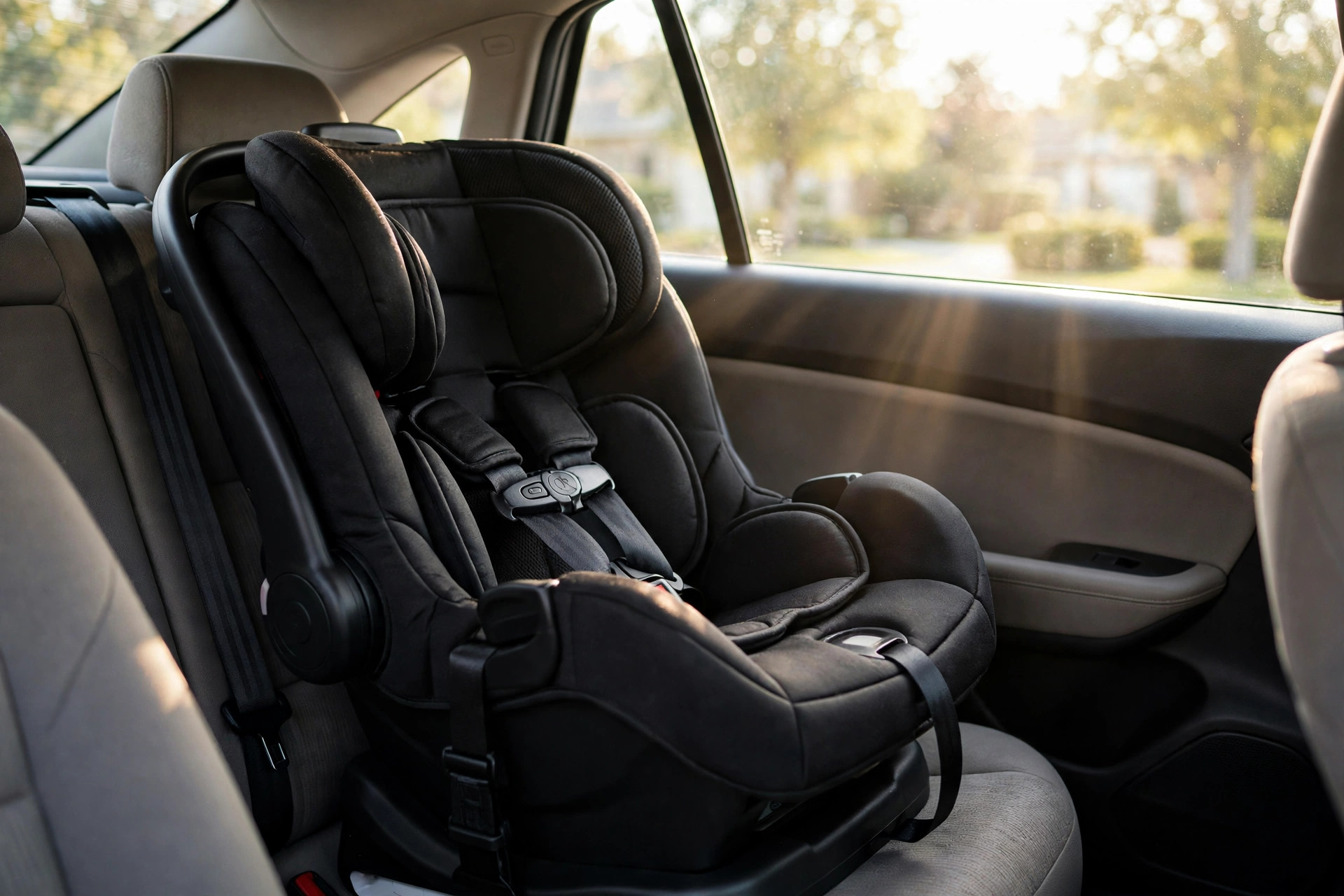
Every car seat expires — usually 6 to 10 years from manufacture, stamped into the plastic shell. The plastic degrades, the standards evolve, and the manufacturer stops supporting it. Check the date before you buy anything, especially open-box or clearance seats that may have sat in a warehouse.
And here is the one absolute rule in all of baby gear: never buy a used car seat. Crash history is invisible — a seat that was in even a minor fender-bender can have compromised protection you cannot see, and no seller can prove otherwise. This is the category where used is never worth it, whatever the discount. Buy new, buy in November for the 20–30% cut, and register the seat with the manufacturer so recall notices actually reach you.
The buying math: an infant bucket seat lasts about 9 months and clicks into a travel system; a convertible seat goes from newborn to booster (up to ~65 pounds) and lasts years. If the budget is tight, the convertible is the buy-once answer — just confirm it genuinely fits a newborn, because some convertibles do not, and a poor newborn fit is a safety issue, not a comfort one. Keep kids rear-facing as long as the seat allows; the seat’s limits — not the birthday — decide when to turn.
The traps: bundles, wipe math, and the newborn markup
The 12-piece layette bundle is the classic trap: six onesies in sizes the baby outgrows in three weeks, two hats, and a blanket, priced to feel like a deal. Buy separates in the sizes you actually need. The same logic kills most “newborn starter kits” — a pile of 90-day-lifespan items at a per-item price you would never pay individually.
Diaper and wipe subscriptions deserve real math, not vibes. Calculate the per-wipe and per-diaper cost, not the per-pack price, and re-check it every few months as the baby sizes up — the “subscribe and save” 20% is genuine, but only if that brand actually fits your baby. I have seen parents locked into a year of a diaper that leaks because the subscription felt like a deal.
The smart-monitor subscription tax: a $150–300 monitor plus $10–15 a month for cloud video and “insights” runs $400–480 over two years. A good audio monitor and a $40 camera with local storage do the same job for the things that matter — hearing the baby and seeing the baby. And before buying anything secondhand-adjacent (a hand-me-down crib, a marketplace bassinet), check the model on the federal recall site; nursery gear has one of the highest recall rates of any category.
Timing and stacking the November buy
Black Friday week (November 27) is the floor for strollers, car seats, and nursery furniture — this is when the 20–30% cuts land. Cyber Monday (November 30) is better for the small stuff: monitors, diaper-subscription deals, and gear accessories, where the codes stack.
The real stack is the registry completion discount. Most registries offer 10–15% off remaining items starting about 60 days before the due date — and it stacks on sale prices. Time your registry so that discount window overlaps Black Friday week, and a $550 sale stroller becomes ~$470. When I priced my own registry this way, the completion discount stacked on a Black Friday car-seat price beat every “deal” I had seen all year.
Layer the usual stack on top: a cashback portal (5–15% at the big baby retailers), discounted gift cards (5–10% off face value from established sellers), and the store’s own app-exclusive code. On a $500 stroller the full stack routinely takes off another $75–100. Buy the car seat at least a month before the due date — installation and a safety check take an afternoon you will not have later.
Frequently asked questions
When do strollers go on sale?
Black Friday week (November 27) is the year’s deepest stroller sale — full-size strollers run 20–30% off, and prior-year colors drop further. Spring is the other window, when new models arrive, but November has the widest selection at the floor price. Avoid buying at full price in the two months before; the same stroller will be cheaper in November.
Is it safe to buy a used car seat?
No — this is the one baby category where used is never worth it. Car seats expire (6–10 years, stamped on the shell), and crash history is invisible: a seat from even a minor crash can have compromised protection you can’t see. Buy new in November for the 20–30% cut, and register the seat so recall notices reach you.
Travel system, or stroller and car seat separately?
It depends on how you live. A travel system (infant seat that clicks into the stroller) is unbeatable for the first 9 months — but the stroller is bulky, and most families buy a lightweight stroller within a year. Walk daily? Skip the system: buy a full-size stroller with a one-hand fold plus a convertible car seat that fits newborns.