
Should You Use a Cashback Portal? How They Pay You, What Shrinks the Payout, and the Click-Through Rules
Every few months someone asks me whether cashback portals are a scam. They are not — but “not a scam” is a low bar, and it is the wrong question. The useful question is where the money comes from and what you have to do to actually receive it. A portal is a middleman that sells your click to a store and splits the commission with you. On purchases you were going to make anyway, it is the easiest money in deal-hunting: a few extra seconds of clicking for 2–15% back.
The catch is that the money only arrives when you follow the rules of a system most shoppers never see. I have collected a few hundred dollars through portals over the years, and I have also watched a $40 payout evaporate because I clicked through two days too early. Here is the commission chain, the click-through rules that decide whether your purchase tracks, and the stacking order that turns a small rebate into a real discount.
Where the money actually comes from
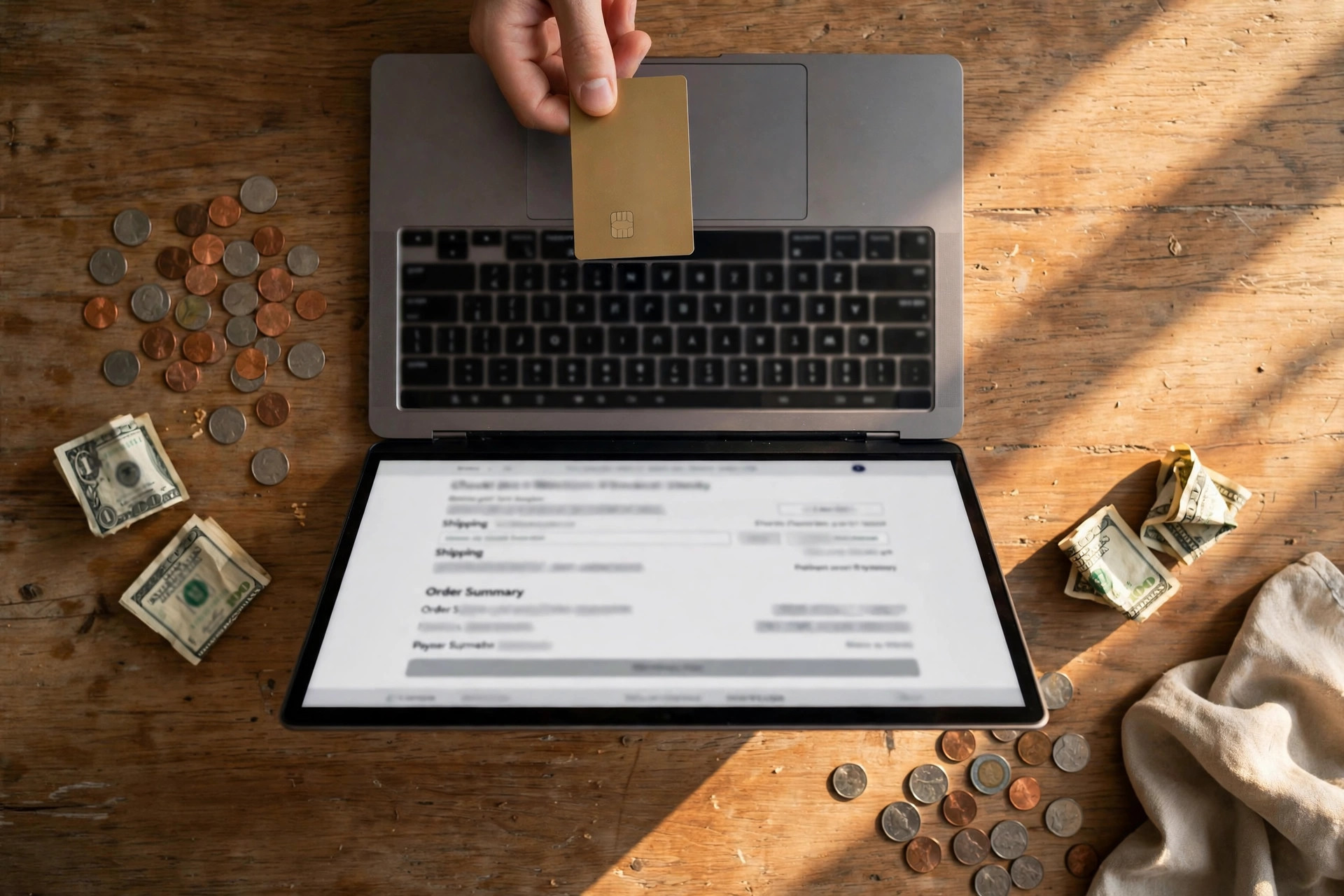
Stores pay a bounty for every sale that arrives through an affiliate link — typically 3–15% of the order, set per store in a published rate card. When you click through a portal, the store drops a tracking cookie in your browser; when you check out, the store pays the commission to the portal. The portal keeps a cut and hands you the rest as cashback. Nobody is being generous — the store was going to spend that money on ads, and buying your click through a portal is cheaper than buying it from Google.
This is why rates differ so wildly between stores and even between weeks: a portal is reselling the store’s marketing budget to you. A store running a customer-acquisition push pays 10%; a store with razor-thin margins pays 2%. When you see an eye-popping rate, check what it applies to — headline rates usually cover the categories nobody buys, while the popular ones pay the floor rate.
The uncomfortable corollary: the portal makes money when you buy. Its incentives align with yours only as long as you buy what you were already going to buy. The moment you buy something because “it’s 8% back,” the portal has made money on you, not for you. Treat portals as a discount tool, never as a shopping advisor.
The click-through rules
Almost all cashback runs on last-click attribution: the store pays the commission to whoever dropped the most recent tracking cookie before checkout. The portal only earns when it is your last click, so it only pays you when it was your last click. Everything about cashback technique follows from this one sentence.
Click through the portal on the day you buy, not yesterday — cookies have short windows and every intervening click overwrites them. Finish the purchase in one clean session in the same tab: no detours through a coupon site, no price-comparison hops, no “email me my cart” link, because each of those clicks can steal the last-click credit. And pause your ad blocker for the checkout, or whitelist the portal — blockers intercept the tracking handshake and the store never sees the portal at all.
The coupon-extension wrinkle: automatic coupon-testing extensions also drop affiliate cookies when they inject codes — and as the last click, they can steal the portal’s credit. This is the affiliate-cookie commission trade I wrote about in the coupon-extension guide, and it bit me before I connected the dots: disable the extension on portal purchases, or the extension collects your cashback.
What shrinks or kills your payout
Not everything qualifies. Gift cards, travel, alcohol, and a few brand carve-outs are routinely excluded, and partial exclusions are the norm — a portal advertising “up to 10% at that store” is often paying 10% on the categories nobody buys and 2% on the ones everyone does. Check the store’s rate page before a big purchase; the exclusions live there in small print worth reading exactly once.
Returns claw the payout back. Cashback posts as pending and only becomes payable after the store’s return window closes — typically 60 to 90 days. Return the item and the payout disappears, because the store takes its commission back from the portal. The delay is the store’s fraud insurance, not the portal stalling you; plan around it rather than fighting it.
In-store pickup and price adjustments commonly break tracking, so complete the order in one clean session and have it shipped for the cleanest payout. And every portal has a minimum payout threshold, usually $10–25 — your first payout takes a while to unlock, which is fine. It also keeps the hobby honest: if you are chasing the threshold with purchases you would not otherwise make, the portal is winning.
The stacking order
The portal is a layer, not a strategy — and it stacks with everything else. The order that maximizes savings: click through the portal first, because it is the only layer that has to be first. Then apply the coupon code at checkout. The portal pays on the post-coupon subtotal, so the coupon shrinks your payout slightly — on a $100 order with a $20 code at 5% back, you lose $1 of cashback and save $20. Take the coupon every time.
Then pay with a discounted gift card if you have one, and earn rewards on the card you used to buy the gift card in the first place. The full stack on a $200 purchase: a 5% portal ($10), a coupon ($20), a gift card bought at 10% off ($20), and 2% card rewards ($4). None of the layers is dramatic; together they take 25–30% off a purchase you were making anyway. This is the same stacking order from the coupon-stacking guide, with the portal as layer one.
The one thing that does not stack: two portals. Last-click means one winner — clicking through two portals just pays the second one. Pick the higher rate and commit.
The verdict
Use a portal for every planned online purchase. It costs thirty seconds and a fresh click, and a normal household’s online spending turns into $50–200 a year of real money. No fee, no card to open, no credit check — and unlike the store credit card or buy-now-pay-later, there is no debt instrument hiding in the fine print. The usual advice still holds: read what you are agreeing to, use an established portal, and do not hand purchase history to a company you have never heard of.
Do not let the portal choose what you buy. The rates are bait by design — the highest percentages cluster on the stores and categories with the most margin, which are rarely the best deals. Judge the deal by the street price first (the price-history guide’s rule), then collect the cashback as the last layer. A portal on a bad price is just a discount on an overpay — and I would rather have 0% back on the right $80 item than 10% back on the wrong $120 one.
Frequently asked questions
Do cashback portals really pay?
Yes. They split the store’s affiliate commission with you — the store was going to pay that commission to someone, and the portal is cheaper than ads. Payouts are real money via check, PayPal, or gift card, released after the return window closes (usually 60–90 days). The money is slow, not fake.
Can I stack a coupon code with cashback?
Yes — it is the most reliable layer of the stack. Click through the portal first, then apply the coupon at checkout. The portal pays on the post-coupon subtotal, so the coupon shrinks your payout slightly — but the pair still beats either trick alone. Disable coupon autofill extensions on that purchase: they can steal the portal’s last-click credit.
Why didn’t my cashback track?
The usual killers: an ad blocker intercepting the click, a stale session (click through fresh on purchase day), or a detour through a coupon site that stole last-click credit. In-store pickup and returns also break or claw back payouts. File a missing-cashback claim with your order number — established portals honor most of them.