
Are Outlet Stores Actually Cheaper?
I once drove forty minutes to an outlet mall for a jacket ‘on sale’ at $89 — the tag said compare at $275. Back home, I looked the jacket up: the full-line version sold for $160 at regular stores. The outlet one was a cheaper cousin with thinner zippers and a flimsier lining. The $275 price was fiction; the ‘sale’ was theater. That afternoon rewired how I shop outlets.
Outlet stores can still save you real money — the past-season pieces on the clearance rack are often the best deal in the mall. But most of what fills those shelves was never meant for a regular store. Here is how outlets really work, the traps built into the format, and the 90-second check that tells you whether the price tag is honest.
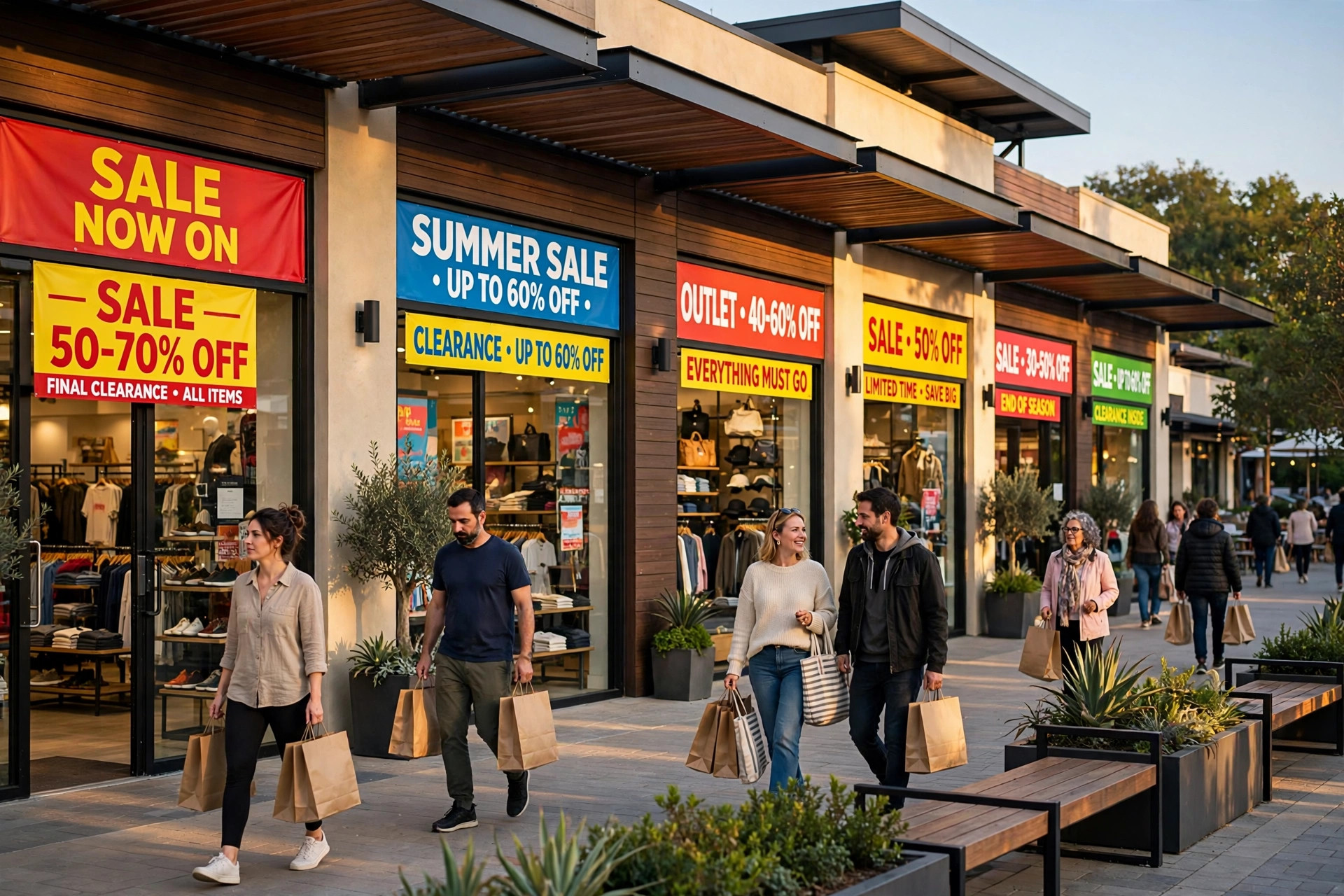
Outlet inventory comes in three kinds (only one is a real sale)
First, past-season transfers: the genuine stuff. Regular stores ship unsold stock to their outlets, and it sells at real markdowns — the navy wool coat from last winter, the sneaker colorway they overproduced. This is the good outlet inventory, and it is rarely more than a corner of the store anymore.
Second, and now the bulk of most shelves: made-for-outlet lines. Brands manufacture separate, cheaper versions of their products sold only in outlets — same logos, simpler construction, different SKU. They were never sold at the ‘compare at’ price on the tag. That price references the full-line product they imitate, not the thing in your hands.
Third, factory seconds and irregulars: items with visible flaws sold as-is, usually cheap, sometimes with a clipped tag or an ‘irregular’ stamp. Honest as long as the flaw is disclosed and the discount is real — I check these carefully and pass on anything I cannot inspect. Know which of the three you are holding before you do any price math.
The ‘compare at’ price is the fiction that sells the store
That jacket’s tag said compare at $275. The full-line jacket really did sell for around that — but the outlet jacket was never the full-line jacket. The comparison is the entire business model: it makes an $89 price feel like a 68% discount instead of what it often is, a fair price for a cheaper product.
Some outlets go further: the compare-at number is a suggested price nobody ever charged, or a ‘value’ assigned to a different item entirely. Treat compare-at as advertising copy, not a was-price. The only honest comparison is the current selling price of the identical item somewhere else — which is exactly what the 90-second rule checks.
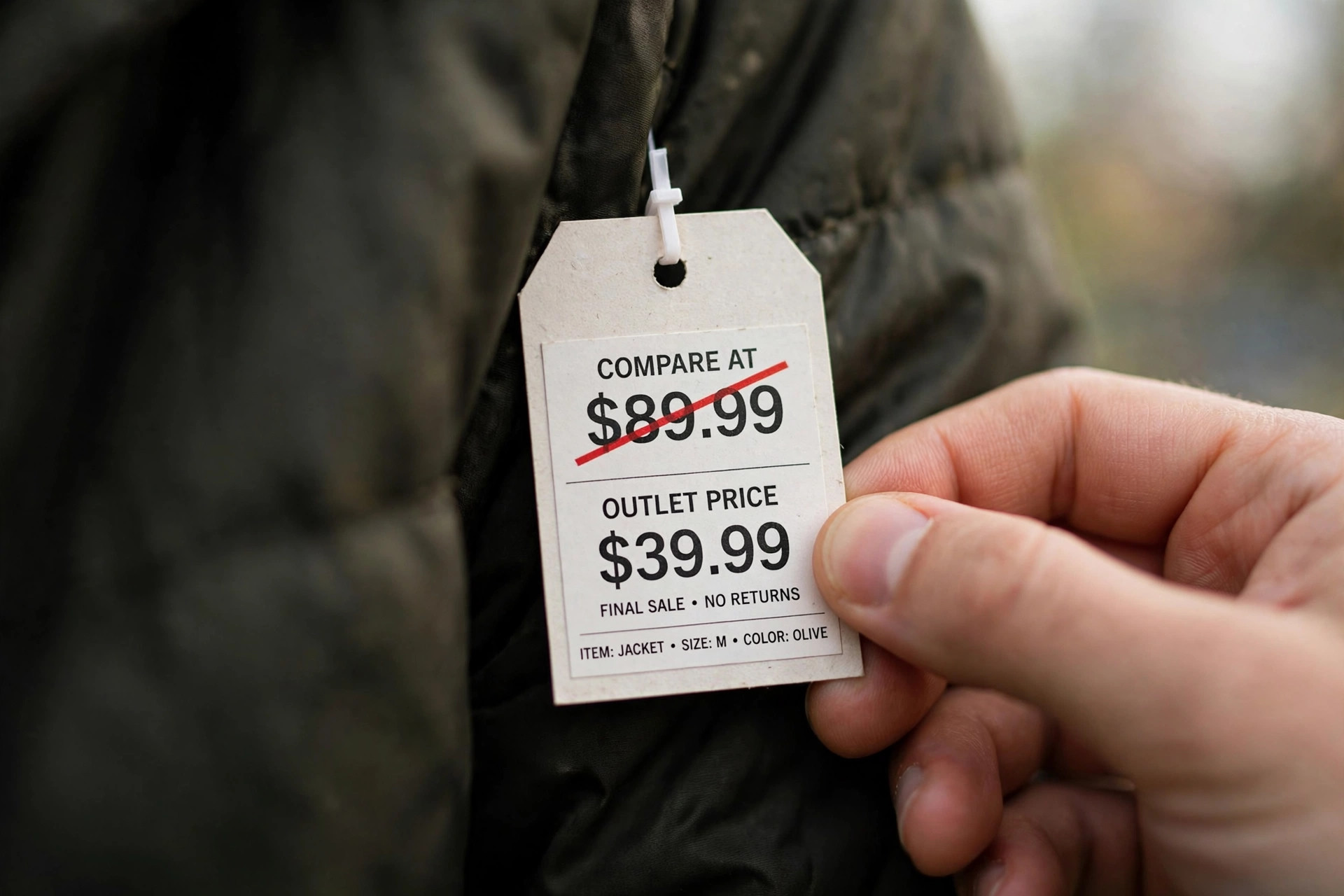
The quality check: cheaper products, not cheaper prices
Made-for-outlet does not always mean bad. It means different, and you should verify it before the register. I test zippers first — a zipper that snags in the store will fail at home — then feel the lining, check the stitch density at the stress points, and look at the hardware: light, hollow buttons and thin clasps are where the savings hide.
Look for the tells: a separate SKU, labels noting the item was made for outlet sale, and staff who cannot match it to anything on the brand’s main site. None of this means walk away automatically — a simpler $89 jacket can be a fine $89 jacket — but it is the difference between buying a deal and buying a costume of one.
Where outlet deals genuinely hide
The clearance rack at the back, where already-marked-down outlet stock takes an extra 40 to 50 percent off — that is the one place in the store where the discount math is usually honest, and it stacks with the coupon-day discounts many outlets run.
Past-season classics that do not change: the plain white sneaker, the navy coat, the leather belt. Nobody remakes them cheaper each year in a way that matters, and last year’s version is the same product at half the price. And the check-online rule: search the item before you buy, because a surprising amount of outlet inventory sells online at the same price — sometimes with free shipping and a better return policy. If the phone says the price is identical, the forty-minute drive just cost you the deal.
The 90-second outlet rule
Before anything goes into the bag, search the product name and SKU on your phone. If the identical item is cheaper online after shipping, walk away. If the outlet price beats it, buy — you just did the one thing most shoppers skip.
Two more rules finish the job. Never buy to ‘make the trip worth it’ — that is sunk-cost shopping, and the outlet layout is designed to trigger it. And only buy what you came for, plus the clearance-rack finds that survive the phone test. The trip itself has a price: gas, tolls, the snack at the food court. Count it. A $20 saving that cost $18 to reach was a $2 hobby.
Frequently asked questions
Are outlet stores actually cheaper than regular stores?
On genuine clearance of past-season stock, often yes. On made-for-outlet lines — the bulk of most shelves — the ‘discount’ is measured against a price the item never sold at. Compare the same product online before trusting the tag.
What does ‘compare at’ mean on an outlet price tag?
It is a suggested full-line price, often for a different, better-made item. The outlet version frequently has a cheaper SKU made only for outlets. Treat compare-at as advertising, not a was-price.
Can I return outlet purchases to a regular store?
Usually not — outlets are separate operations with their own receipts and policies, and clearance is often final sale. I photograph the receipt at the register. When in doubt, ask before the tag comes off.