
How to Spot a Fake Online Store Before You Pay
Every November, a fresh crop of online stores appears selling $300 sneakers for $49 and $1,200 phones for $199. The websites look polished, the ads look real, and the checkout works fine. Then the package never arrives — or what arrives is a plastic imitation in a baggie. The store vanishes, the ads vanish, and the money is already gone.
I have nearly fallen for one of these myself — a social ad for a jacket at 70% off, from a store I had never heard of, with a countdown timer ticking down. I did not buy it, and the reason I did not is a five-minute routine I now run on any store I do not know. It has saved me from at least two bad orders since, and it costs nothing but a little suspicion.
The price that cannot be real
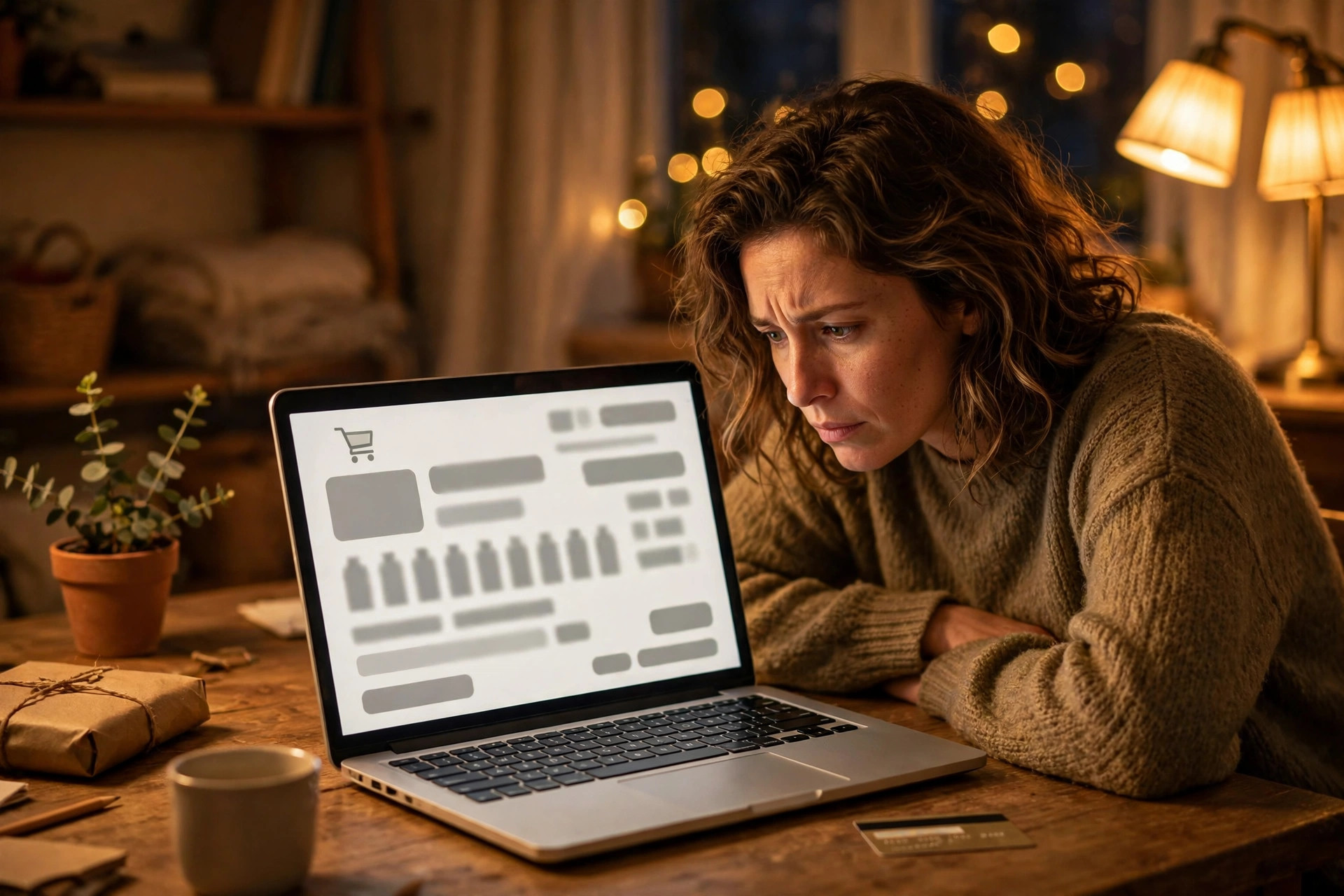
Start with the price, because it is the bait. A legitimate store can discount a current product 20, maybe 30 percent. It cannot sell a current flagship phone for 70 percent off and stay in business — nobody’s wholesale cost allows it. When the discount breaks the laws of retail economics, the product is either fake, never shipped, or both.
In my experience, the tell is the comparison, not the number. Search the exact product on the brand’s own store and two big retailers. If the mystery store is half their price on a current item, that gap is not a deal you found — it is the scam’s business model. Real clearance happens on last year’s models, not this year’s flagships.
One exception: genuine liquidation and refurbished stock can hit 50 percent off. But those sellers say so — they name the condition, show the grading, and sell through a marketplace with buyer protection. A no-name storefront offering new-in-box flagships at half price, with no explanation, is not liquidating anything.
Read the storefront before you trust it
A real store wants to be found. A fake one wants to be untraceable. Before you buy, spend two minutes looking for the basics: a physical address, a phone number that answers, an About page that names an actual company. When the contact page is a bare form and the address is a P.O. box — or missing entirely — walk away.
Then search the store’s name plus “reviews” or “scam” in a new tab. Real stores accumulate a trail: years of mentions, forum threads, a business listing. Fake stores leave a different trail: a domain registered last month, a handful of identical five-star reviews posted the same week, and complaint threads from people whose orders never arrived. I checked a “boutique” this way once and found its entire review history was three weeks old. I did not order.
Also read the site itself. Stolen product photos, copy-paste policy pages, prices in a currency that does not match the store’s claimed country, a checkout page with no padlock — each one alone is a warning, and two together are a verdict.
The payment test
This is the check that matters most, because it decides whether a mistake is recoverable. Pay with a credit card or PayPal Goods and Services and you have a dispute path: the issuer can reverse the charge when nothing arrives or a counterfeit does. That protection is the whole reason to use them on an unknown store.
Now look at what the store accepts — and, more importantly, what it insists on. Wire transfers, gift cards, cryptocurrency, and peer-to-peer apps sent as “friends and family” cannot be reversed. A store that only takes irreversible payment is telling you exactly what it plans to do with your money. I have a standing rule: if I cannot pay by card, I do not buy. No discount is worth an unrecoverable payment.
Watch for the bait-and-switch at checkout, too: the store advertises card payments, then at the final step pushes you toward a bank transfer “for a 10% discount” or claims the card processor is down. That last-minute switch is the oldest trick in this playbook, and it is the moment to close the tab.
The social-media ad trap
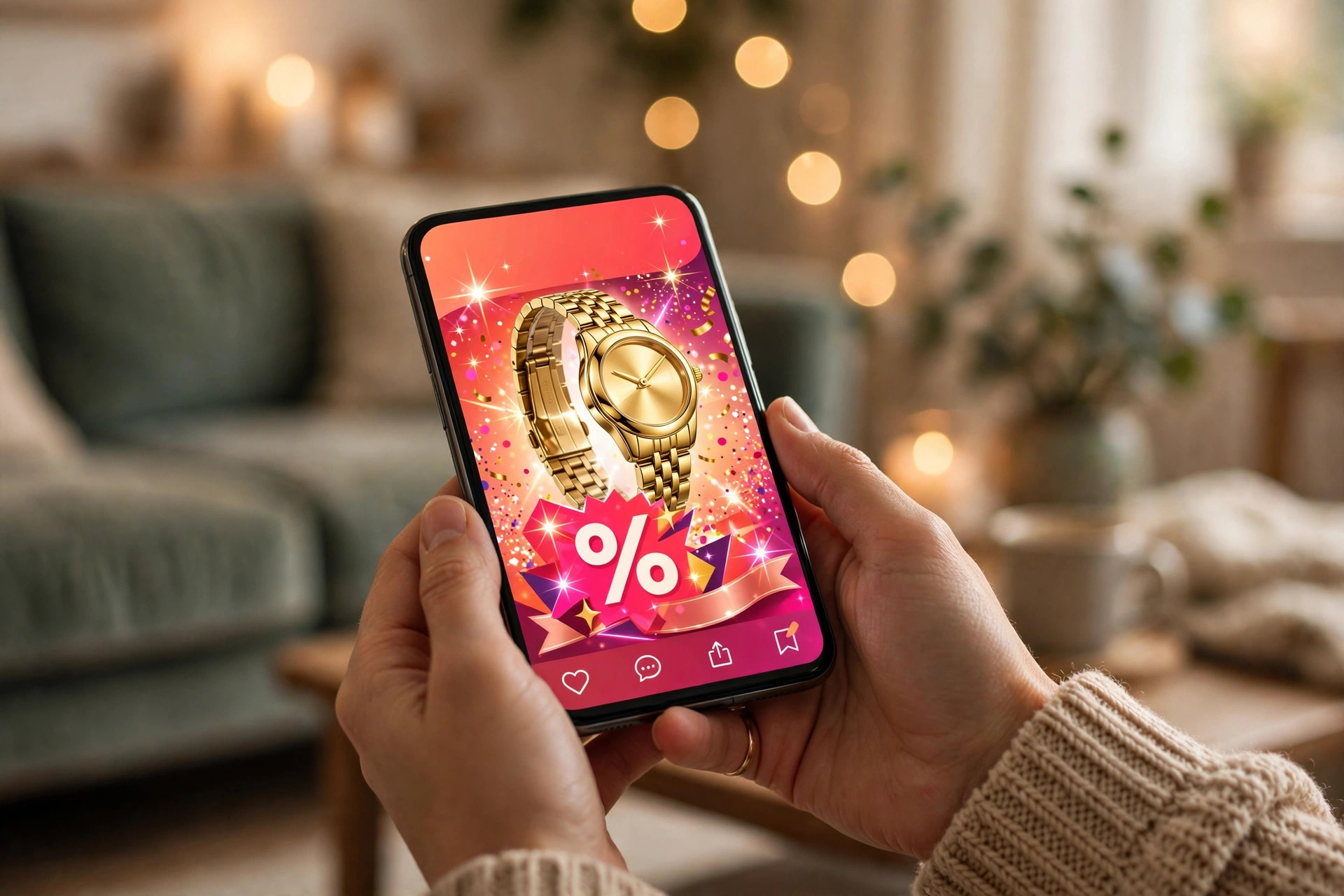
Most fake stores do not wait for you to find them — they come to you, as ads on social media, showing a product video stolen from a real brand and a price that makes you stop scrolling. The ad account is usually weeks old, the page has almost no posts, and the comments are turned off or full of people asking where their order is.
The countdown timer is part of the act. “Sale ends in 02:47:13” resets every time you reload, because there is no sale and no deadline — only urgency, manufactured to stop you checking. When I see a timer on a store I have never heard of, I treat it as a confession, not a deadline.
If an ad tempts you, do not buy from the ad. Search the product on a store you already trust, or on the brand’s own site. Nine times out of ten the real thing costs more — and that gap is the price of the lesson the ad was selling.
If you already ordered
Do not wait for a package that is not coming, and do not accept the store’s offer to “reship” — that is just a second delay while the dispute window shrinks. Call your card issuer or open a PayPal dispute as soon as the delivery date passes, or immediately if what arrived is counterfeit. Save everything: screenshots of the listing, the order confirmation, the tracking page, and photos of whatever arrived.
If you paid by debit card, call your bank at once — debit disputes are possible but slower, and the money is already out of your account. If you paid by wire, gift card, or crypto, recovery is unlikely; report it anyway to your country’s consumer-protection agency and fraud-reporting portal, because reports are what get these operations shut down, and tell your bank so they can flag the recipient.
And the last step is the one people skip: warn the next person. Leave a review on the store’s page, report the ad on the platform that showed it, and tell the friend who sent you the link. The storefronts survive on silence and fresh victims; a single honest review breaks the chain.
Frequently asked questions
Can a fake store look professional?
Yes — convincingly. Scammers buy polished templates, steal real product photos, and fake reviews and trust badges. A slick design proves nothing. Judge the store by its price realism, its contact details, its domain history, and its payment options, not by how good the homepage looks.
Is PayPal safe on a store I do not know?
PayPal Goods and Services is — it carries buyer protection and a dispute process. PayPal Friends and Family is not: it is a gift, with no protection, and any store that asks for it is waving a red flag. Always check which one you are sending before you confirm.
How long do I have to dispute a fake-store order?
With a credit card, usually 60 to 120 days from the statement date, depending on the issuer — but do not wait. Open the dispute as soon as the delivery date passes or a counterfeit arrives. The sooner you file, the stronger your case and the less time the store has to vanish.