
Halloween Deals 2026: Costumes, Candy & Decorations — What to Buy When (and the November 1 Clearance Rule)
Halloween has the shortest sale season of any holiday — about four weeks, and then the aisles flip to Christmas on November 1. That compressed window is why October spending feels chaotic: costumes, candy, decorations and party supplies all due in the same month, all priced like a ransom.
But Halloween is also the easiest holiday to beat. The pattern is dead simple once you see it: Halloween gets cheap twice — mid-October for the things shoppers buy first, and November 1 for everything else. Here is the calendar, the unit math, and the traps.
The October calendar
Early October is costume week. This is about selection, not price — licensed kids’ costumes sell through their size runs first, and the popular ones are gone by mid-month. If your kid has a specific costume in mind, buy it in the first two weeks of October. The price difference between October 5 and October 20 is usually zero; the difference is whether the medium still exists.
Mid-October is candy week. Grocers build their candy displays two to three weeks out, and the best unit prices land here — after that the displays thin out and the final week sees prices drift up on the remaining bags. I buy candy the second weekend of October now, after the year I paid 30% more on October 30 for the picked-over leftovers.
November 1–7 is clearance week, and it is the real sale. Costumes, decorations, party supplies, fog machines — everything Halloween goes 50–70% off while the Christmas reset takes over the aisle. We buy next year’s costumes on November 2 and have never paid full price since. The rule is simple: this year you buy in October, every future year you buy in November.
Costumes: the one-wear economics
A kids’ costume gets worn twice: trick-or-treat night and the school parade. Price it like what it is. The tiers: $15–25 for basic kids’ costumes, $25–40 for licensed characters, $40+ for adult and premium builds. The licensed trap is the $38 costume that looks identical to the $19 generic once it is on a six-year-old — one kid’s Spider-Man photo is worth exactly as much as the other kid’s.
The generic-plus-accessories move beats the licensed costume almost every time. A $15 base costume plus a $5 mask or prop reads better than the $40 sealed-bag licensed version, and the pieces get reused. My kid wore the $38 licensed one exactly once; the $8 cape from the generic tier is still in the dress-up box three years later.
Size up for kids, always. They grow between the order date and October 31, and a costume that is slightly big looks fine while one that is slightly small is a disaster. And check the return window before buying — Halloween costumes are final-sale more often than you expect, and “trick-or-treat sized” means nothing.
Candy: do the unit math
Bags, not pieces, are how you should compare. A $12 bag with 100 fun-size pieces at 180 calories total is not cheaper than the $9 bag with 60 pieces if the second one’s pieces are bigger — divide by weight. The per-ounce math is the only honest number in the candy aisle, and the warehouse clubs usually win it by 20–30% over grocery sale prices.
The variety-bag trap is the filler: every 300-piece bag is padded with pieces nobody eats — the hard candy, the taffy, the wrapper-with-a-joke. You are paying per ounce for filler. Buy the bag whose pieces you would eat yourself; leftovers you actually want are a feature, not a bug.
And the audience rule: full-size bars cost more and they are worth it if you get real foot traffic. The year we gave out full-size bars, our house became a destination for the whole block — kids plan their routes. If you only get a dozen trick-or-treaters, the fun-size bag is fine. If you get two hundred, bulk bags and full-size bars are the two honest options; everything in between is filler.
Decorations: buy after Halloween
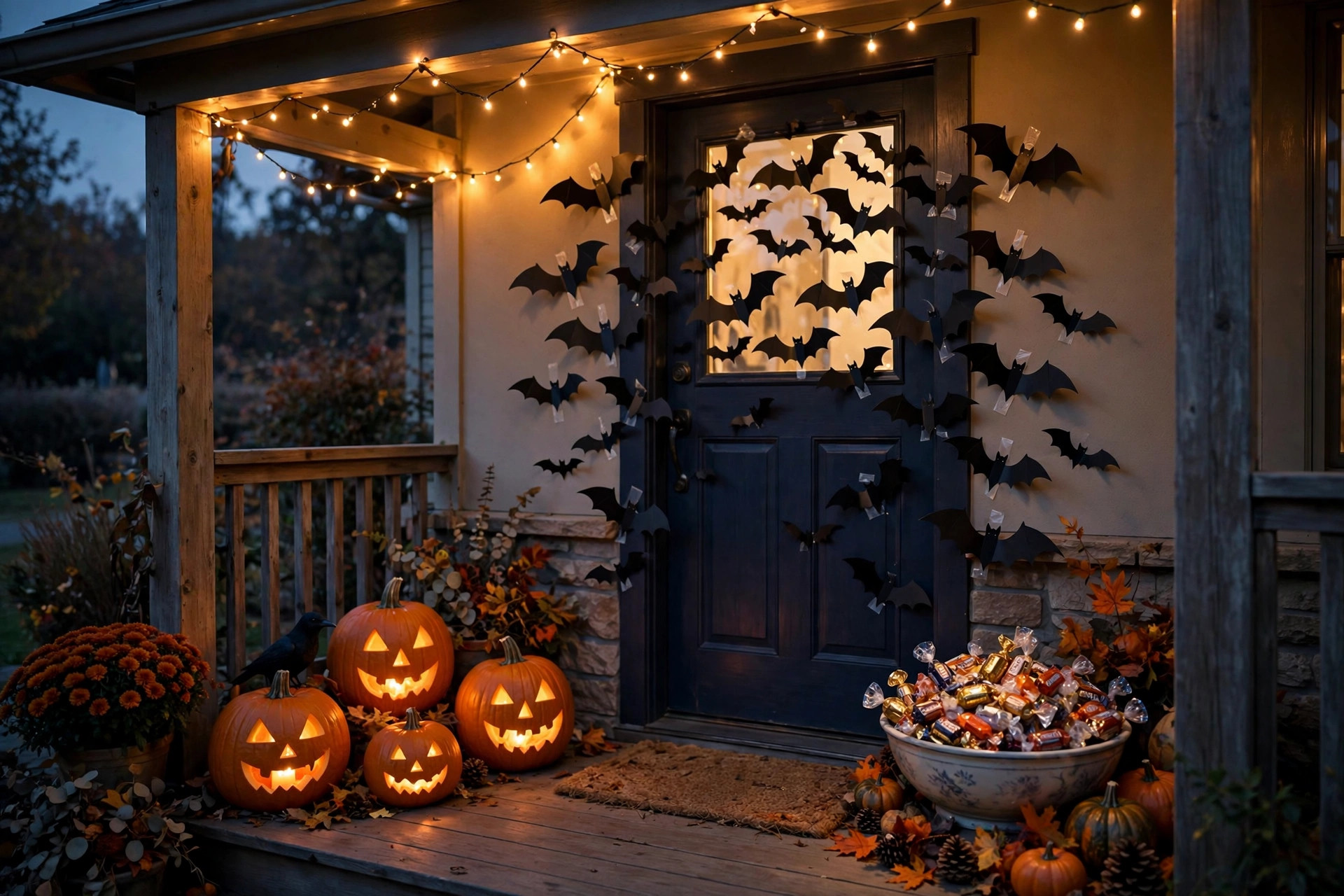
Nearly all of our decorations were bought on November 1, and that is the whole strategy. Inflatables, lights, projectors, the big yard props — they all hit 50–70% off in the week after Halloween, and they are the same items at full price the next September. The selection is thinner, so pick your category now and your item later: decide this October that you want an inflatable dragon, buy the dragon on November 2.
The storage tax is real. Before buying the twelve-foot skeleton on clearance, measure where it sleeps for eleven months. A $75 inflatable that fits in a tote is a better deal than a $50 giant that lives in your living room all year. Inflatables have run three seasons for us — patch kit in the box, dry it before storage, and the motor outlasts the fabric.
The fog machine fine print: they are cheap ($30–40) and the juice lasts, but indoor fog trips smoke detectors and outdoor fog needs still air — the slightest breeze turns your graveyard into a faint smell of theater. And battery-operated LED pumpkins have replaced real carved pumpkins in our house: no rot, no fire risk, same glow, and they go on clearance too.
The traps
The spooky tax: anything orange, black, or pumpkin-shaped costs more in October. The same extension cords, batteries, and face paint are 20–30% cheaper in the regular aisle than the Halloween endcap. Walk one aisle over before you buy.
The last-minute markup. October 29–31, third-party sellers price-spike costumes and accessories that stores have sold out — I have seen a $25 costume listed at $60 the night before Halloween. If you are buying this late, buy from a store with curbside pickup, not a marketplace listing.
The September display. Stores put Halloween out in late August at full price and it feels early, so it feels like you have time. You do not — the sale prices start in October, not before. September full price is the most expensive Halloween there is.
The free-shipping threshold. Adding $12 of filler to save $6 shipping is the oldest trick in the checkout, and it works best in October when everything is already in the cart. A costume, candy, and decorations from one order with real shipping math beats three “deals” that each needed filler.
Frequently asked questions
When is the cheapest time to buy Halloween stuff?
For this year: mid-October grocery displays for candy and early October for costumes, before size runs sell out. For next year: November 1–7 clearance takes 50–70% off costumes and decorations — that is when we buy almost everything, planned twelve months ahead.
Are Halloween costumes cheaper before or after Halloween?
After, by a mile — 50–70% off November 1–7 for next year’s costume. But if you need one this October, buy early: licensed kids’ sizes sell through by mid-October, and third-party online sellers price-spike the final week. The worst day to buy a costume is October 30.
How much should I spend on Halloween candy?
$40–80 covers a normal trick-or-treat turnout if you shop per ounce. Variety bags look cheap but you are paying for filler pieces nobody eats — buy the bag whose pieces you would eat yourself. Full-size bars cost more and make your house the one the block remembers.