
Black Friday 2026 Power Tools Guide: Combo Kits, Price Floors, and the Battery-Platform Trap
Black Friday is the year's best moment to buy power tools. Home Depot and Lowe's spend November in an open price war over combo kits and free-battery promos, and the discounts are real — I've tracked the same 2-tool starter kit for three years running, and it bottoms out every November at prices spring shoppers never see.
But tools are also one of the sneakiest Black Friday categories. The headline kit prices hide skimpy batteries and last-generation motors, and the biggest decision — the battery platform — locks you in for a decade. Here's what I wish someone had told me before I bought my first kit.
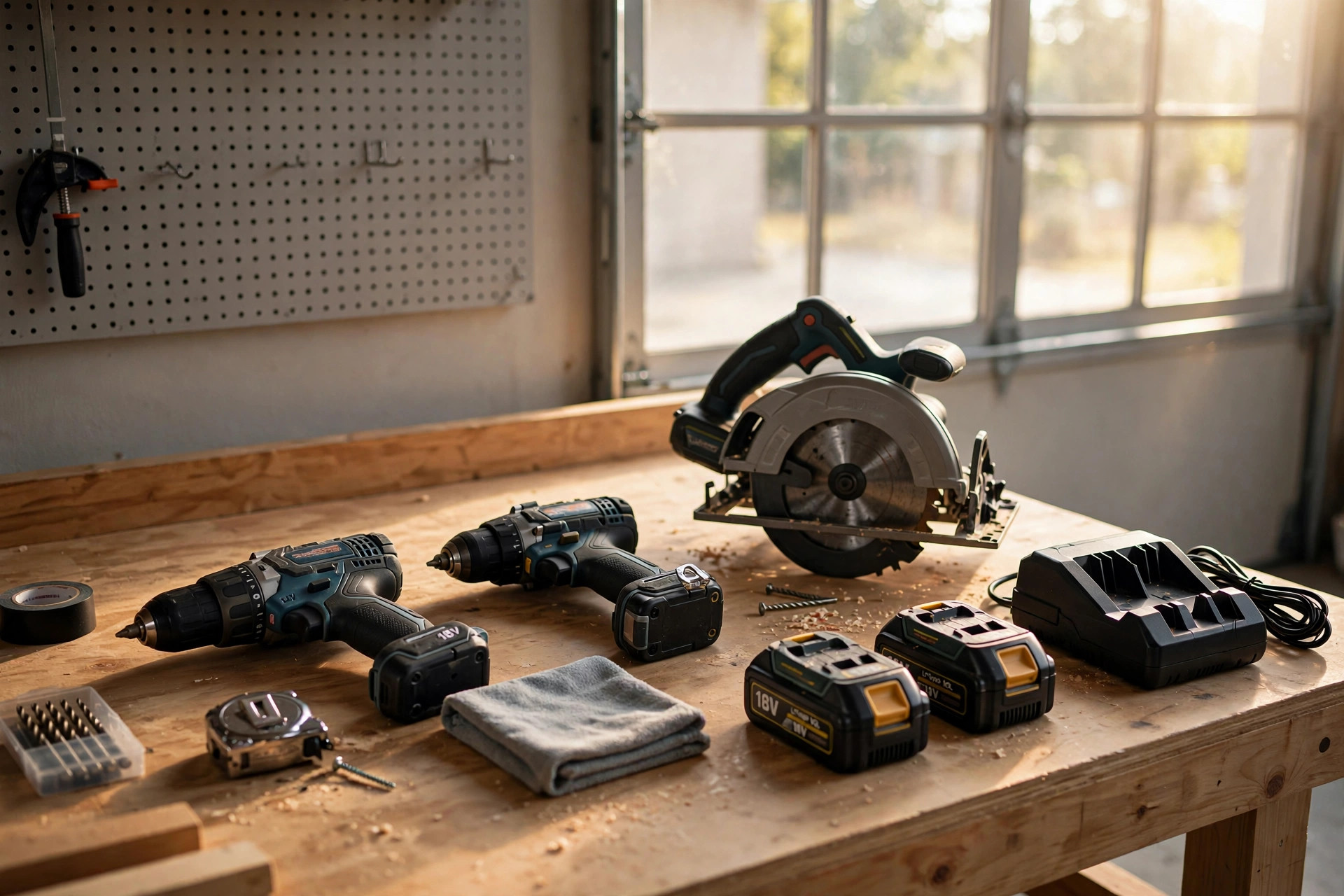
Pick a battery platform before you pick a tool
A cordless tool purchase is really a platform purchase. DeWalt 20V MAX, Milwaukee M18, Makita 18V LXT, and Ryobi ONE+ are mutually incompatible ecosystems — the batteries you buy today will power every tool you add for the next ten years. Switching platforms later means rebuying chargers and batteries, which usually costs more than the tools themselves.
The tiers are honest. Ryobi ONE+ is the DIY sweet spot: the widest tool lineup in the business, batteries that have fit the same tools since 1996, and the deepest Black Friday discounts. DeWalt and Milwaukee are the prosumer tier — tougher tools, bigger batteries, higher prices, smaller but real holiday cuts. I've been on the same platform for six years now, and every bare tool I've bought since was the cheapest one I'll ever buy.
Retailer exclusivity shapes the deals: Milwaukee is exclusive to Home Depot, Kobalt to Lowe's, Ryobi to Home Depot. The two big chains compete by brand, not by item — so the November promos at one won't be matched model-for-model at the other. DeWalt and Makita are sold everywhere, which makes them the easiest platforms to price-compare.
Price tiers worth waiting for
Combo kits are where Black Friday earns its reputation in tools. The classic doorbuster: a 2-tool starter kit (drill + impact driver) with two batteries, a charger, and a bag at $99–149 — roughly half the October price. A 4–5 tool Ryobi or Kobalt kit drops to $199–249; the DeWalt or Milwaukee equivalent lands at $299–399. These are real floors, not theater — the kits are assembled for the holidays, and the math checks out against the sum of the parts.
The other November special is the free-battery promo: buy a bare tool, get two batteries free — or buy a kit and get a bonus tool free. At holiday pricing the free batteries are worth $80–120 of the kit's price, which makes the effective tool cost lower than any standalone sale. In my experience, this is where the genuinely unbeatable prices hide — if you already own the batteries, these promos are the best deals of the season.
Watch for the gift-card kicker: some holiday weeks add a $25–50 store gift card instead of cutting the price further. It's a real discount only if you'll spend it — full value if you shop the store regularly, zero if you won't.
The amp-hour trap and the combo-kit fine print
The headline price of a holiday kit almost always rests on the batteries. A kit with two compact 2.0Ah batteries looks identical in the ad to the kit with two 5.0Ah batteries — but the 2.0Ah pair dies twice as fast in a circular saw and costs $40–60 less apiece. For drills and drivers the compacts are fine; for saws and grinders, check the amp-hours before you celebrate.
The "free tool" in holiday promos is usually last-generation or lower-tier: a brushed motor instead of brushless, or a model sitting below the brand's current lineup. Brushless motors run cooler, last longer, and squeeze 30–50% more runtime from the same battery. If the promo tool doesn't say brushless, assume it isn't.
Retailer-exclusive model numbers are rampant — a kit that looks like the standard model with a slightly different suffix is often a holiday-only configuration with different batteries or accessories. Compare what's in the box — battery count, amp-hours, charger, bag vs hard case — not the model number or the headline tool count.

Refurbished and factory-reconditioned: the sleeper deal
The deepest per-tool prices of the season are rarely in the flyers. Factory-reconditioned tools — returns and demos rebuilt and tested by the manufacturer, carrying the same warranty as new — sell 30–50% below the Black Friday price of the new equivalent. The manufacturers' reconditioned outlets run their own November sales, and this is where pros quietly buy.
One rule: buy reconditioned only from the manufacturer or an authorized outlet, and confirm the full factory warranty in writing — not a 30-day store warranty. Skip third-party "refurbished" listings with vague provenance, especially marketplace batteries that may be counterfeit.
And skip the off-brand mega-kits entirely: 8-tool sets for $149 from brands that won't sell you replacement batteries in two years, with chargers I'd rather not trust. The same goes for holiday "deals" on safety gear — eye protection, respirators, hearing protection — where the knockoffs aren't where you save money. Buy the real thing at full price.
Timing: when tools go on sale
October's preview sales are the early round: the holiday assortments launch mid-month, the first combo-kit deals are often as good as anything later, and stock is full. If you know the kit you want, October beats fighting the crowds.
Black Friday week, November 27, is the doorbuster peak: the $99 starter kits, the free-battery promos, the deepest brand-on-brand competition. The headline kits are genuinely limited — stores allocate a set number per location, and the popular ones sell through by the weekend.
Cyber Monday, November 30, and the first week of December are the cleanup: online-only kit configurations, extra-percentage-off codes, and the reconditioned outlets' own sales. Prices stay low through mid-December, then the kits go back to regular pricing until Father's Day — the next real tool sale. If you miss November, waiting beats buying at January prices.
Frequently asked questions
Which power tool battery platform should I pick?
Ryobi ONE+ for DIY — the widest tool lineup, batteries that have fit since 1996, and the deepest Black Friday discounts. DeWalt or Milwaukee for prosumer work — tougher tools, higher prices, real holiday cuts. The batteries are the ecosystem; retailer exclusivity shapes where the deals appear.
What are the best Black Friday tool deals?
Starter kits at $99–149, 4–5 tool kits at $199–249, and free-battery promos — the free batteries are the real November special. Factory-reconditioned tools at 30–50% below new prices are the sleeper deal.
Are factory-reconditioned tools worth buying?
Yes — when they come from the manufacturer with the full factory warranty, at 30–50% below the Black Friday new price. Skip third-party 'refurbished' listings with vague provenance, especially marketplace batteries that may be counterfeit.