
Is a Warehouse Club Membership Worth It? The Per-Unit Math That Decides
I signed up for a warehouse club the year my grocery bill first cleared two hundred dollars a week. The pitch was simple: a roughly sixty-dollar annual fee in exchange for prices no regular store can touch. Nine years later I still renew — but not for the reason I expected. The savings are real on maybe a dozen items, nonexistent on a hundred more, and the membership only pays off because I learned which is which.
That is the whole decision. A warehouse club membership is not a discount; it is a bet. You pay up front, then spend a year collecting small per-unit wins against that fee. Whether you come out ahead depends on three things: what you buy, how far you drive, and whether you can walk past the sample aisle without a flatbed cart. Here is the math that decides.

What the fee actually buys
The basic tier, roughly sixty dollars a year, buys you checkout rights: access to the bulk prices, the in-store services, the gas station, and usually online ordering. The premium tier, roughly twice the price, adds a two percent annual reward on eligible purchases — its own math problem, covered below.
What the fee does not buy is lower prices on everything. A decent chunk of the store only matches a well-priced regular grocer; the club wins on a narrow list — gas, tires, butter and cheese, paper goods, batteries, and the occasional electronics loss-leader. The rest is convenience, not savings.
The services matter more than most people expect. In my experience the optical and pharmacy counters often run cheaper than the store down the street. And the gas station alone is a line item worth pricing: a ten-to-twenty-cent per-gallon discount on a fifteen-gallon tank, twice a month, is thirty-six to seventy-two dollars a year — more than half the fee before you buy a single roll of paper towels.
The break-even math
The membership is a fixed cost you must earn back. At sixty dollars a year, you need to save five dollars a month beyond what you would have paid elsewhere. That is one big win (a twenty-dollar savings on tires or an appliance) or five small ones (a dollar a week on paper products). Small numbers — but only if you compare against the right baseline: not the inflated list price, but what you actually paid last month at your regular store.
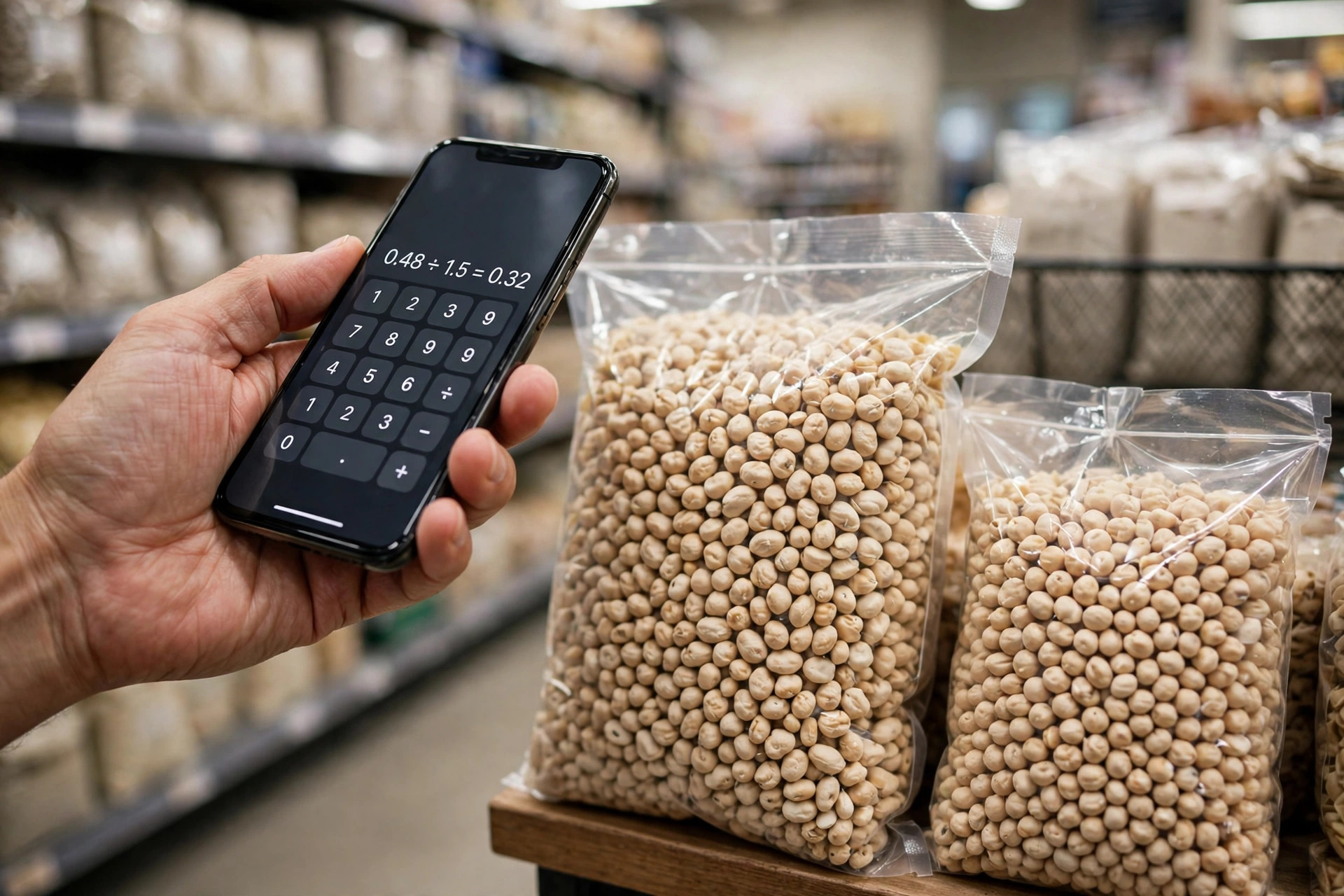
The per-unit comparison is the whole game, and bulk packaging lies to your eyes. A five-pound bag that costs twice the two-pound bag is not a deal — it is the same price in a heavier bag. I do the division on every first purchase: price divided by ounces, tablets, sheets, whatever the unit is. My phone calculator lives in my hand for the first month; after that I know my dozen winners by heart and skip the rest.
The premium tier needs its own test. A premium tier costing sixty dollars more than basic must earn sixty dollars back, which takes three thousand dollars a year in eligible purchases. Under that line, the premium tier is just a more expensive basic membership. I ran my receipts for a year before upgrading — most households do not clear three thousand, and the tier pitch at the register never mentions the line.
Where the savings are real
The winners share a trait: non-perishable, high-frequency, and annoying to run out of. Paper towels, toilet paper, dish soap, laundry detergent, batteries, cooking oil, butter (it freezes perfectly), cheese, rice, oats, canned goods, pet food, diapers. These are the items where the per-pound math beats a good store sale month after month, and where buying six months of supply is a feature rather than a chore.
Then there are the structural wins — things regular stores simply price differently. Tires: the club out-the-door price with installation and rotation usually beats every quote I have gotten elsewhere. Gas: priced as a traffic draw, not a profit center. Optical and travel bookings: odd corners of the store where the club buying power shows up far from the grocery aisles. My last two pairs of glasses came from the club, and the exam-plus-lenses total was half my old quote.
And the house brands. Every major warehouse club runs its own label on a few hundred products, and those are consistently where the quality-to-price ratio peaks. I trust them more than name brands on some items — the house-label butter, eggs, and paper products are my defaults now. The label carries the club reputation, so it is made to not embarrass.
Where the bulk traps hide
Perishables are the first trap. A gallon of milk at a great per-ounce price is not a deal if half of it expires in your fridge — the half you pour down the drain was never discounted. I only buy fresh items I know my household finishes inside the freshness window: a family of four finishes the big spinach tub; a household of two does not. Be honest about your actual consumption, not your aspirational meal plan.
The second trap is the size illusion. Not every bulk SKU is cheaper per unit — some are priced identically to the smaller package, and a few are worse. Manufacturers know bulk looks cheap, so they price the look. The calculator settles it in ten seconds. I have found bulk cereal, snack mixes, and some cleaning products where the regular-aisle item beat the pallet version. Bulk is a package size, not a discount.
The third trap is the most expensive one: you spend more because the store is exciting. The treasure-hunt layout, the sample stations — everything is engineered to make the flatbed cart feel like a game. My defense is a list and a rule: if it is not on the list and not a known winner, it waits until next month. Boring, and worth hundreds a year.
My one-year test before I renew
I do not decide on vibes; I do the year-one audit. Keep every club receipt for twelve months and estimate what the same basket would have cost at your old store — conservatively, with the store’s own sale prices, not the shelf price. If the savings clear the fee by a comfortable margin, renew. If they merely match it, you paid sixty dollars for the privilege of bigger carts.
Distance is part of the audit too. A club twenty minutes away costs you forty minutes a trip, and twice a month that is sixteen hours a year of driving. Value your time however you like, but the math changes when the nearest club is a pilgrimage. Delivery exists, but it usually carries fees or surcharges that shave the margin.
The verdict I give friends: join if you buy your basics there monthly, finish what you buy, and live close enough that the trip is not an event. Skip it if you live alone and eat out most nights, if your kitchen cannot store a six-month supply of anything, or if you know the sample aisle owns you. And re-run the audit every year or two — household sizes change, stores move, and a membership that paid in 2024 can quietly stop paying by 2027. The fee renews automatically; make the decision on purpose.
Frequently asked questions
Is a warehouse club membership worth it for a single person?
It can be, on paper goods, batteries, gas, tires, and frozen staples that survive the freshness window. The hard part is perishables: one person rarely finishes a gallon of milk or a tub of spinach before it expires. If most of your food comes home in small portions, a grocery loyalty program usually beats the fee.
Do I need a membership to shop at a warehouse club?
To check out, yes. But some services are often open to non-members: the pharmacy in many states (pharmacy access is regulated), the optical center and the gas station at some locations. Rules vary by location and change often, so call your local club before driving over.
Is the premium tier worth the extra fee?
Only above the break-even line. If the premium tier costs about $60 more than basic and pays 2 percent back, you need $3,000 a year in eligible purchases to cover the difference. Run a year of receipts first. Most households never reach it, and the upgrade pitch at the register never mentions the line.